Project Brief
Mahagi OSBP Infrastructure Upgrade

Implementation Partners
DRC's Ministry of External Trade, Northern Corridor Transit and Transport Coordination Authority, Direction Generale des Douanes et Accises, the DRC Customs, DRC Immigration, Office Congolais de Controle, OCC (The standard Service), Programe de l'hygiene aux Frontieres, PNHF (Health Service), Ituri Provincial Government

Implementation Period
2019 - 2026

Project Participants
Cross border traders

Funding Partners
UK, Finland, Netherlands
Project Rationale
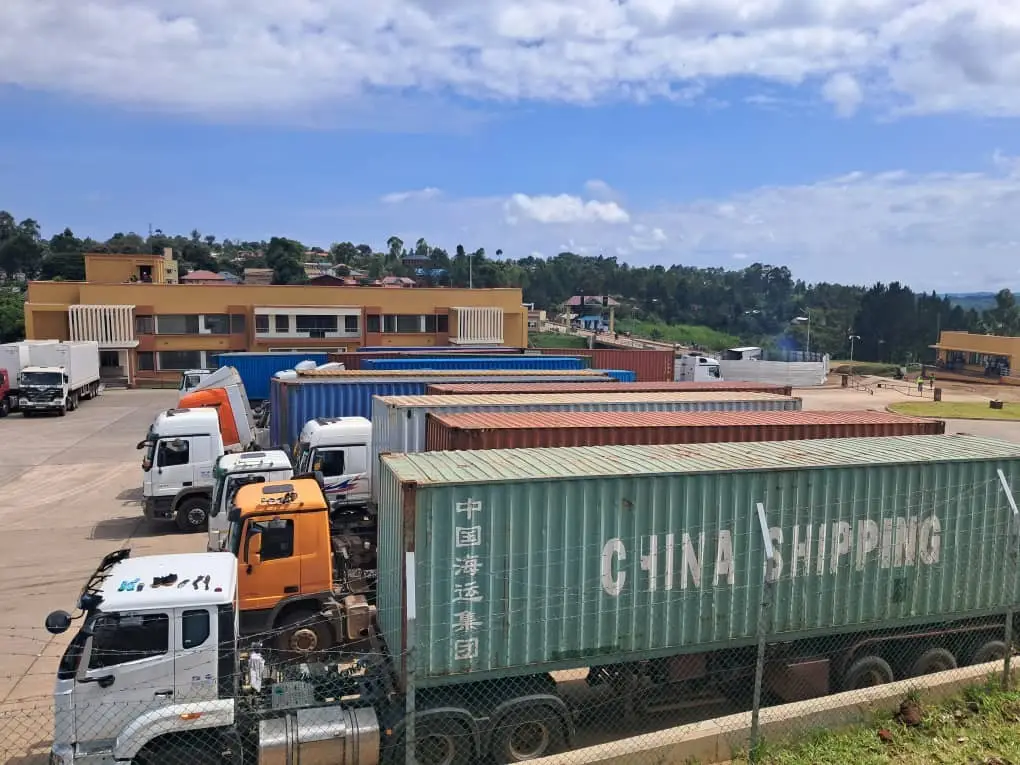
Mahagi border, which connects the DRC to Uganda at Goli on the Northern Corridor, is a strategic trade gateway between Eastern and Central Africa. Yet for years its potential has been undermined by fragmented border procedures, repeated inspections, outdated infrastructure and weak ICT connectivity. The result has been crossing delays of up to eight hours for traders and transporters. These inefficiencies imposed direct economic costs. They have raised transport and logistics expenses, increased uncertainty in supply chains, heightened the risk of spoilage for perishable goods, and eroded profit margins. The effects have been felt most sharply by the thousands of small-scale traders who depend on the crossing every day for income and market access.
Implementation Strategy
TMA’s implementation approach is deliberately integrated. It combines hard infrastructure, systems reform and trader support so that Mahagi becomes a more efficient crossing.
1. Physical Infrastructure (OSBP’s) and Connectivity to create resilient facilities for a functioning One Stop Border Post
- Border Facilities: Construction of modern administration blocks, specialised warehouses, and secure, paved truck parking areas.
- Engineering & Durability: Installation of retaining walls to ensure site stability and the rehabilitation of the Nyibola River bridge to secure and reliable regional connectivity.
- Essential Utilities: Deployment of comprehensive site services, including CCTV surveillance, perimeter fencing, public lighting, and industrial-grade water and sanitation facilities.
2.Systems Modernisation and Operational Harmonisation: To eliminate administrative fragmentation, the project digitises workflows and aligns bilateral protocols:
- Digital Integration: Deployment of ICT systems to facilitate real-time data exchange between DRC and Uganda customs authorities, streamlining the clearance process.
- Unified Protocols: Development of Joint Standard Operating Procedures (SOPs) and specialized training for border staff in integrated control and performance monitoring.
- Process Optimisation: Transitioning to a single-stop logic to eliminate repeated stops and redundant inspections.
3. Inclusive Trade and Stakeholder Support The strategy ensures that modernisation benefits the most vulnerable economic actors through targeted social investments:
- Cross-Border Market: Development of a modern market facility designed to transition informal and small-scale traders into formal trade systems.
- Targeted Empowerment: Implementation of capacity-building and outreach programs specifically for women traders and vulnerable groups, ensuring equitable access to the new infrastructure.
- Safety & Access: Creating a secure environment that encourages the participation of small-scale entrepreneurs in regional value chains.
Aimé Nzoyihera– County Director, DRC
Email : aime.nzoyihera@trademarkafrica.com.