

When Sandrine Munezero was out of a job in July 2024, she did not imagine that just a few months later, she would be running not one, but two butcheries and still dream of exporting Rwandan meat products (charcuterie) to the United Arab Emirates.
The 30-year-old mother of one had relocated from Rubavu to Kigali in search of better opportunities and settled in the Karembure Cell, Gahanga sector of Kicukiro District with her young family. However, with a keen entrepreneurial instinct, it did not take her long to spot a gap in the market.
“The one butchery that was in the neighbourhood sold only beef. If you wanted chicken or fish, you had to travel to the next sector, Nyanza. I saw an opportunity there,” she recalled.
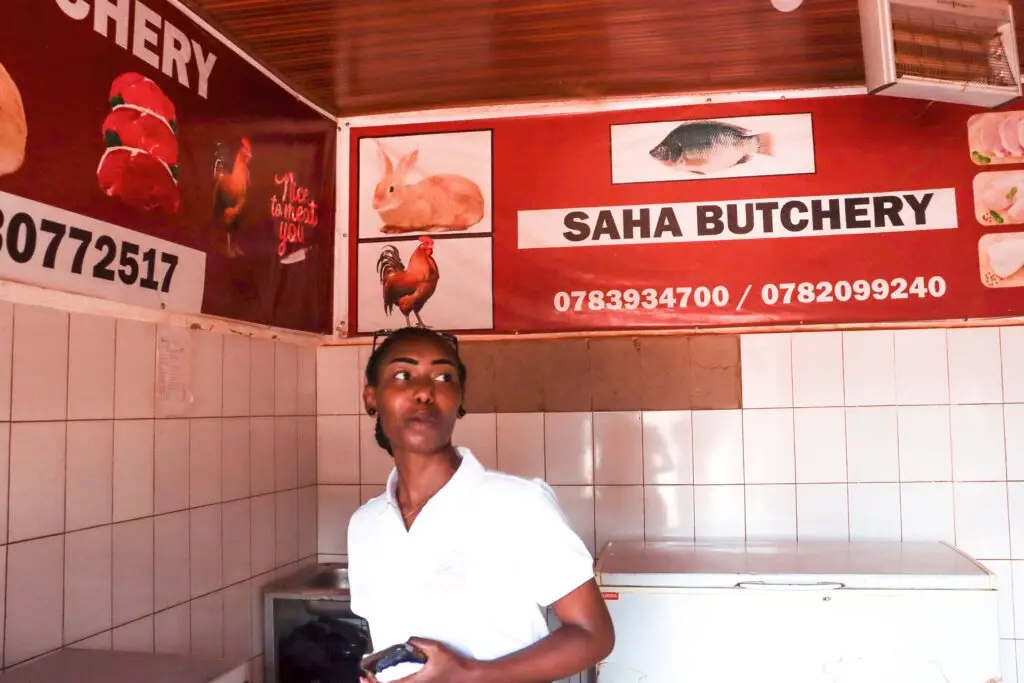
As timing is everything, when the butchery went up for sale, she invested Rwf 4 million she had saved during her time in employment, taking a leap into entrepreneurship. What she lacked in meat-handling experience, she made up for with both a business and a master’s degree in commerce from India. Still, the early foray into entrepreneurship was not without challenges.
“I thought I would just stock meat and people would come. But I quickly learnt that there is more to it, especially around certification,” she said. She explained that her interactions with the Rwanda Inspectorate, Competition and Consumer Protection Authority (RICA) and the Value-added Initiative to Boost Employment (VIBE) programme exposed her to a range of stringent requirements that businesses must meet.
Jointly implemented by TradeMark Africa and the International Trade Centre (ITC) in partnership with Mastercard Foundation, the interventions by VIBE were her turning point. Not only did Sandrine qualify for a cash grant, but she also received training in bookkeeping, food safety and value addition.
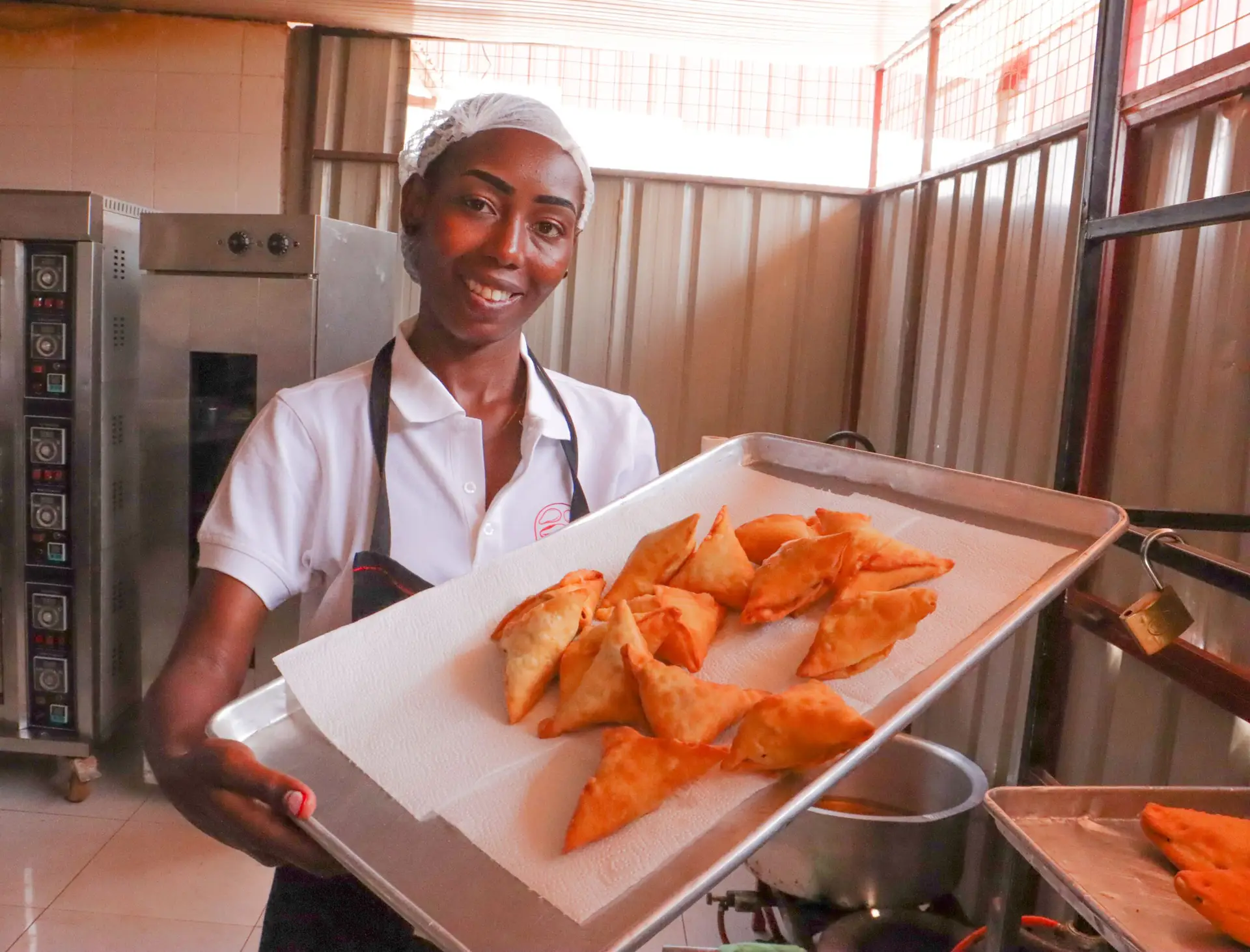
Armed with new knowledge and skills, she used part of the grant to expand her product offering. She stocked poultry eggs, bought a microwave, and ventured into snacks production – meat pies and samosas – in partnership with the neighbouring bakery.
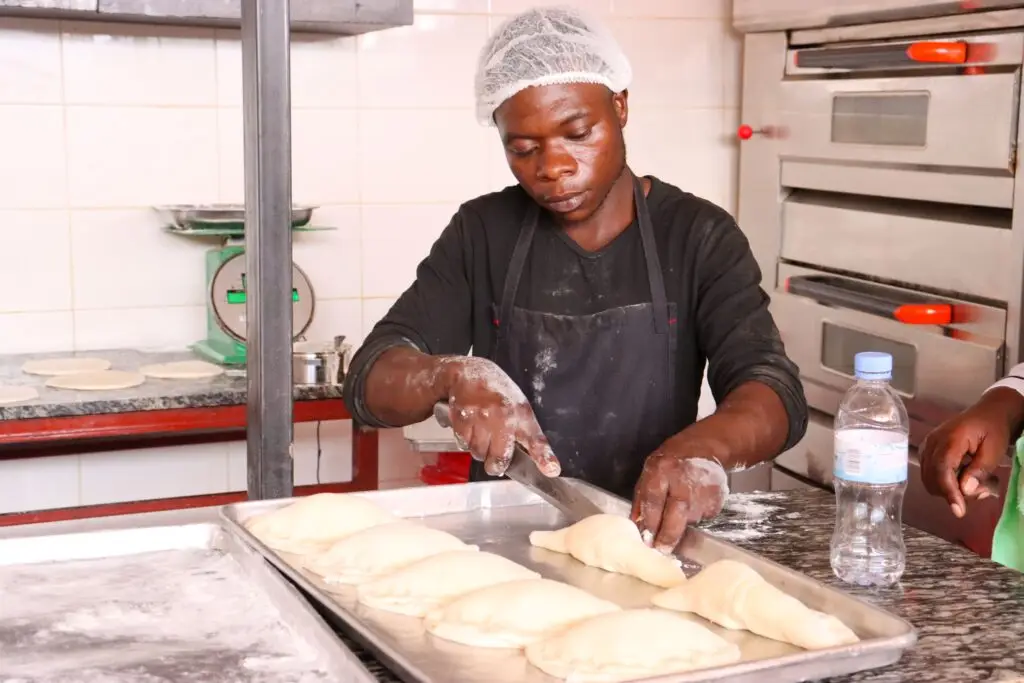
“The bakery was already doing well. They were selling baked goods but had received customer requests for meaty snacks. I partnered with them to produce meat pies and samosas using the meat and eggs from my butchery,” Sandrine said.
Before joining the VIBE programme, Sandrine sold an average of 5 kilogrammes of meat per day and employed three workers. Through the programme’s intervention, she diversified her business by adding value to her products, processing about 10 kilogrammes of minced meat daily and using two trays of eggs to produce Cheriff Samosa snacks and pizzas.
The transformation has boosted her business performance as she now earns an additional Rwf100,000 to Rwf150,000 in monthly profits, has expanded her customer base, and increased employment opportunities. Her workforce has grown from three to five employees. In addition, she engages a young man specifically for snack production while the rest support her butchery operations.
Her success has fuelled even bigger dreams. In 2025, she used the remaining portion of the grant, which was a top up of her personal savings, to open a second branch of Saha Butchery at Karembure trading centre. She has now set a target of owning five butcheries within five years, reaching both the underserved and the densely populated areas.
Still, certification remains a significant obstacle. Meat handling in Rwanda is strictly regulated, and Sandrine is currently working with the Rwanda Inspectorate, Competition and Consumer Protection Authority, through the VIBE programme, to meet hygiene and product quality standards – including the S-Mark. Her staff have already undergone the required vaccinations with the rest of the compliance process in progress.
“I already took care of the biannual vaccination required for my butchers. Butchers require vaccination against hepatitis and frequent testing for HIV and other infectious diseases. The programme is helping us to work on the requirements for the certification in meat handling and S-Mark product quality,” she noted.
The meat trade or production value chain in Rwanda has traditionally been male dominated, with few women at the helm or running enterprises. Sandrine is keen to change that, with one approach being a deliberate effort to hire female butchers. However, “many are often afraid of using the blades. I plan to offer training to women, especially single mothers, and hire them to work in my future charcuterie outlet.”
So far, everything seems to be going according to plan, and she now has her sights set on supporting vulnerable children in her community. Her desire is to start donating eggs as part of her plan to combat malnutrition in children. Thankfully for her, her husband, who is also an entrepreneur, has been her biggest cheerleader and continues to encourage her to dream bigger.
As she envisions building one of Rwanda’s best-known butchery chains, her ambitions do not stop there. “I want to start a charcuterie business selling sausages, ham, and marinated meats. I also want to attend international expos to benchmark for exports to the UAE, EU and beyond.”