


Every day, trucks carrying fuel, fertiliser, machinery, grain and manufactured goods leave the Port of Beira bound for Zimbabwe, Zambia, Malawi and beyond. Their journey to inland markets depends not only on the efficiency of one of Southern Africa’s busiest ports, but also on what happens nearly 300 kilometres inland at the Forbes-Machipanda border crossing.
Mozambique and Zimbabwe reinforced that connection on 8 July 2026 when they signed the joint communiqué operationalising the Forbes-Machipanda Joint Border Committee (JBC). Notably, the two countries chose to formalise the agreement in Beira rather than at the border post itself. The decision to meet in Mozambique’s main maritime gateway, at the eastern end of the Beira Corridor, reflected the close relationship between border efficiency and port performance.
Mrs. Vera Godinho, National Director for External Trade, Ministry of Economy, Mozambique, acknowledged that the operationalisation of the JBC reflected the shared commitment of the two countries to strengthen cross-border cooperation and improve trade facilitation.
Although the JBC establishes a formal mechanism to strengthen coordination among customs, immigration and other border agencies, its significance extends well beyond the border. It recognises that the competitiveness of the Port of Beira and the entire Beira Corridor depends on the seamless movement of cargo from ships to the hinterland and back again.
When a port whose performance is determined inland
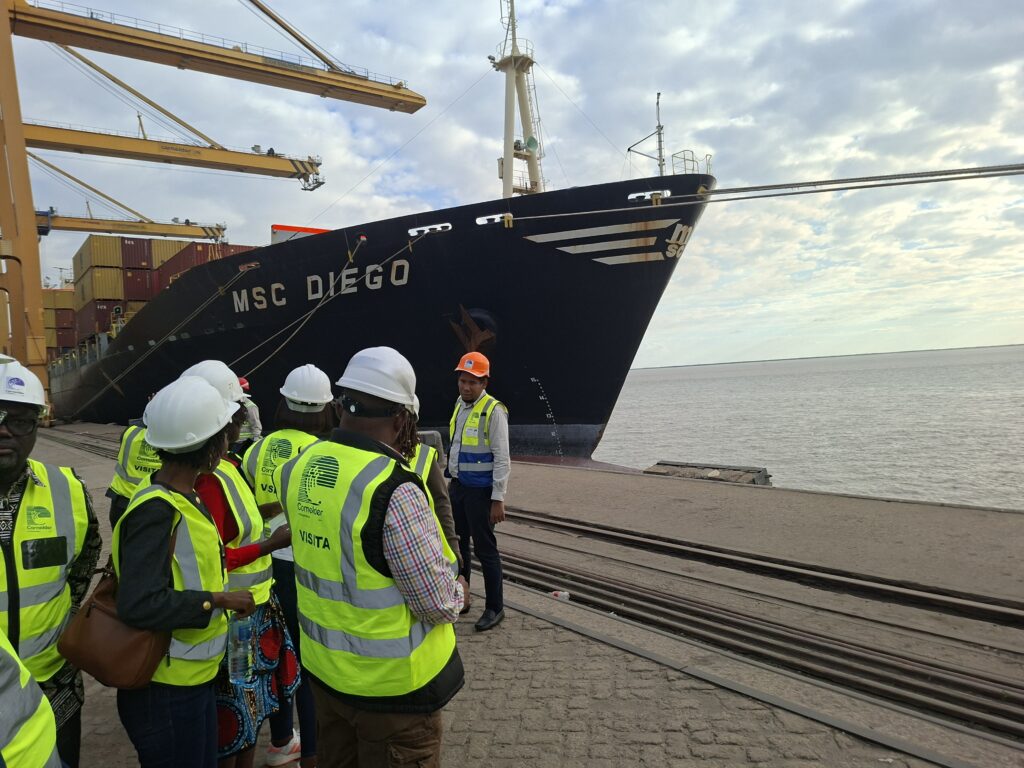
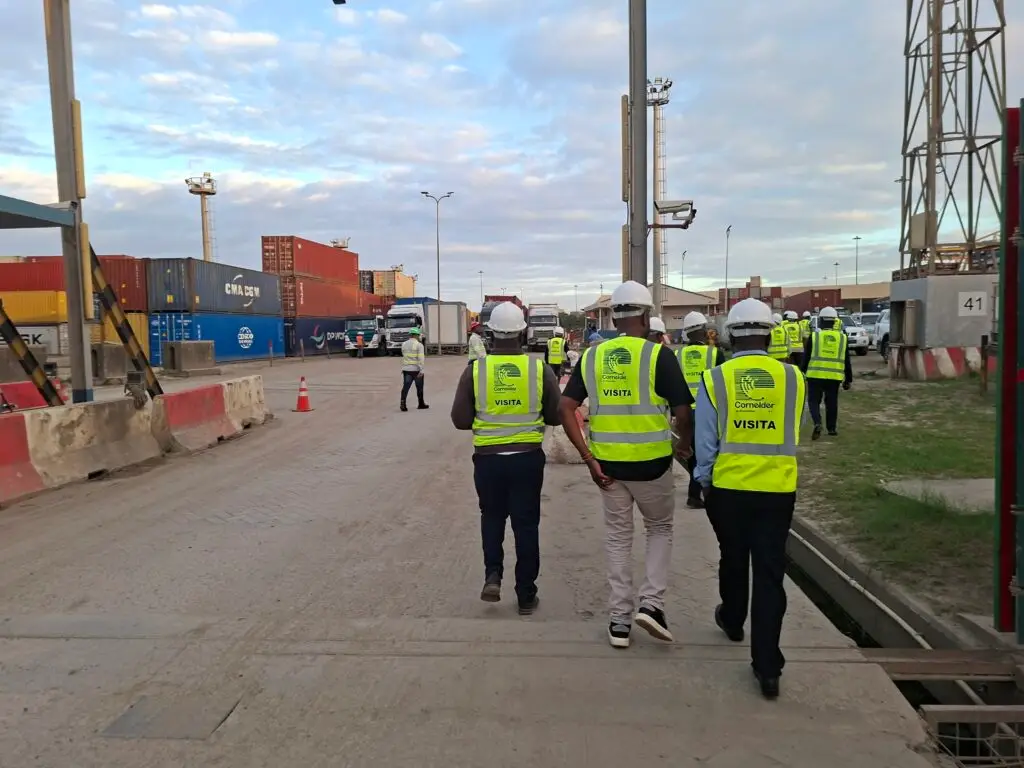
The Port of Beira has steadily emerged as one of Southern Africa’s most strategic trade gateways, providing the shortest maritime route for Zimbabwe and serving growing volumes of cargo destined for Zambia, Malawi and the Democratic Republic of Congo. Zimbabwe alone accounts for around 55 per cent of cargo moving through the port, with virtually all of that traffic passing through the Forbes-Machipanda border before reaching the coast. The port’s container terminal ranked best in the region on the World Bank’s 2023 Container Port Performance Index, and concessionaire Cornelder de Moçambique is investing some $125 million to lift container capacity from 400,000 to 700,000 TEUs a year, including two new ship-to-shore cranes ordered in late 2025.
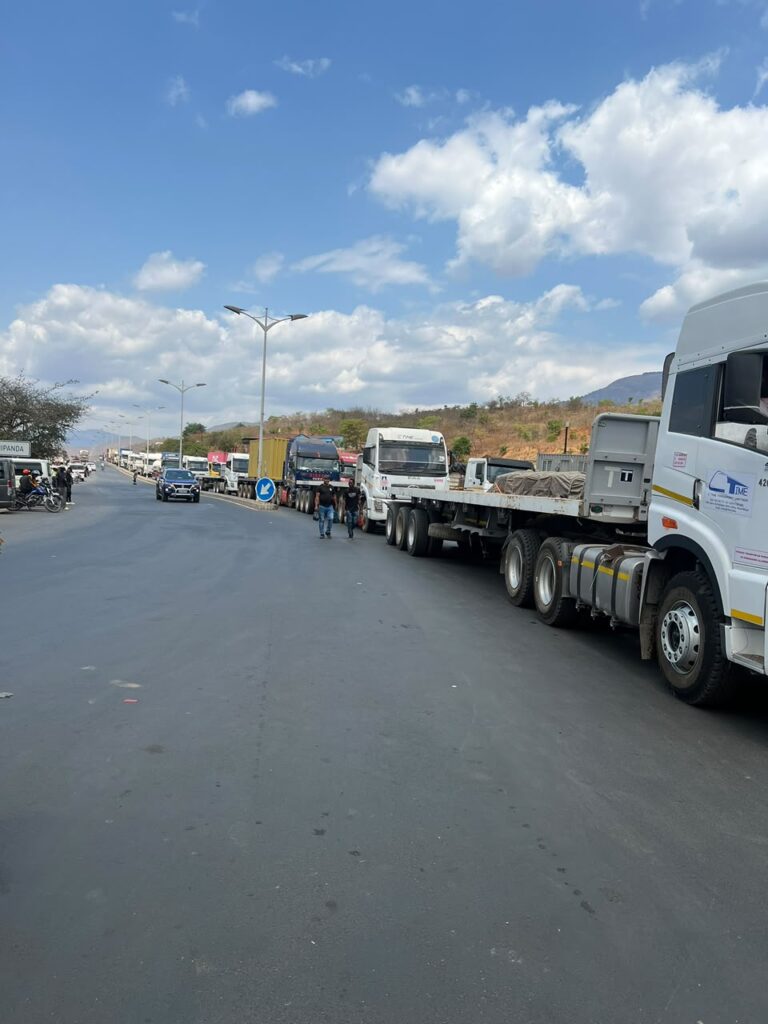
Yet larger cranes and additional berths alone do not necessarily guarantee a competitive port. Diagnostic studies commissioned by TradeMark Africa (TMA) found the corridor was constrained not only by bottlenecks on the road journey but also by its two interface points. In a March 2026 survey of over 1,000 truck drivers, the Machipanda border and the Port of Beira each accounted for 37 per cent of the worst delays reported, with truck waits at the border reported to exceed 72 hours.[1] The survey revealed telling costs. Against a base transport cost of about $1,750 per 44-tonne truckload, a typical two-day delay adds about $2,180, more than the cost of the journey itself, pushing real trip costs towards $4,000, and beyond $6,000 under poor conditions.[2]
How border delays slow ships
The link between a truck queue at Machipanda and a vessel waiting off Beira is direct. Cargo can only be discharged as fast as inland transport evacuates it from the terminal. When trucks sit at the border for days, fleets stay tied up, cargo evacuation slows, yards fill, and vessels wait longer at the dockside, TMA’s Regional Director for Southern Africa, Hope Situmbeko, explains.
Equally, faster crossings mean more round trips per truck, quicker evacuation, freed yard capacity and shorter vessel turnaround lowering the storage, demurrage and inventory costs passed on to businesses and consumers across the hinterland.
The JBC initiative is one of a broader suite of trade facilitation reforms that TMA is implementing in partnership with governments and the private sector, with support from the UK Foreign, Commonwealth & Development Office (FCDO). Together, these interventions are designed to strengthen trade facilitation, improve logistics efficiency, streamline cross-border movement, and enhance the competitiveness of the Beira Corridor and other strategic trade and transport corridors in Southern Africa.
What the Committee will do
During its first year, the JBC will focus on harmonising procedures, aligning operating hours, strengthening joint inspections and intelligence sharing, improving ICT interoperability, assessing infrastructure needs, and monitoring border performance. These deliverables will be guided by the World Customs Organization’s Coordinated Border Management principles, the World Trade Organization’s Trade Facilitation Agreement, and the 2023 Revised SADC Guidelines.
“TMA has taken a corridor approach to achieving efficiencies on trade routes, and we are working with both the Governments of Mozambique and Zimbabwe on strengthening coordination through the Joint Border Committee at the Forbes-Machipanda border. The success of the JBC is expected to provide the private sector with seamless cargo traffic flow at the border, allowing for faster turnaround at Beira Port,” Ms Situmbeko, said.
Regional experience suggests the returns for such reforms can be significant. At Chirundu, on the Zambia-Zimbabwe border, coordinated processing cut clearance times from days to hours; a two-day delay is estimated to have added an estimated $84 per tonne shipped between Johannesburg and Lusaka. The JBC also lays the groundwork for deeper reform, with Zimbabwe already expanding Forbes Border Post through a public-private partnership. Mozambique has committed to a one-stop border post at Machipanda.
Eng. Joy Makumbe, Permanent Secretary, Ministry of Transport and Infrastructure Development, Zimbabwe, stressed that the JBC must deliver practical solutions to border bottlenecks. She noted Zimbabwe’s ongoing expansion of the Forbes Border Post through a public-private partnership and said the country stands ready to share lessons with Mozambique as it upgrades the Machipanda Border Post.