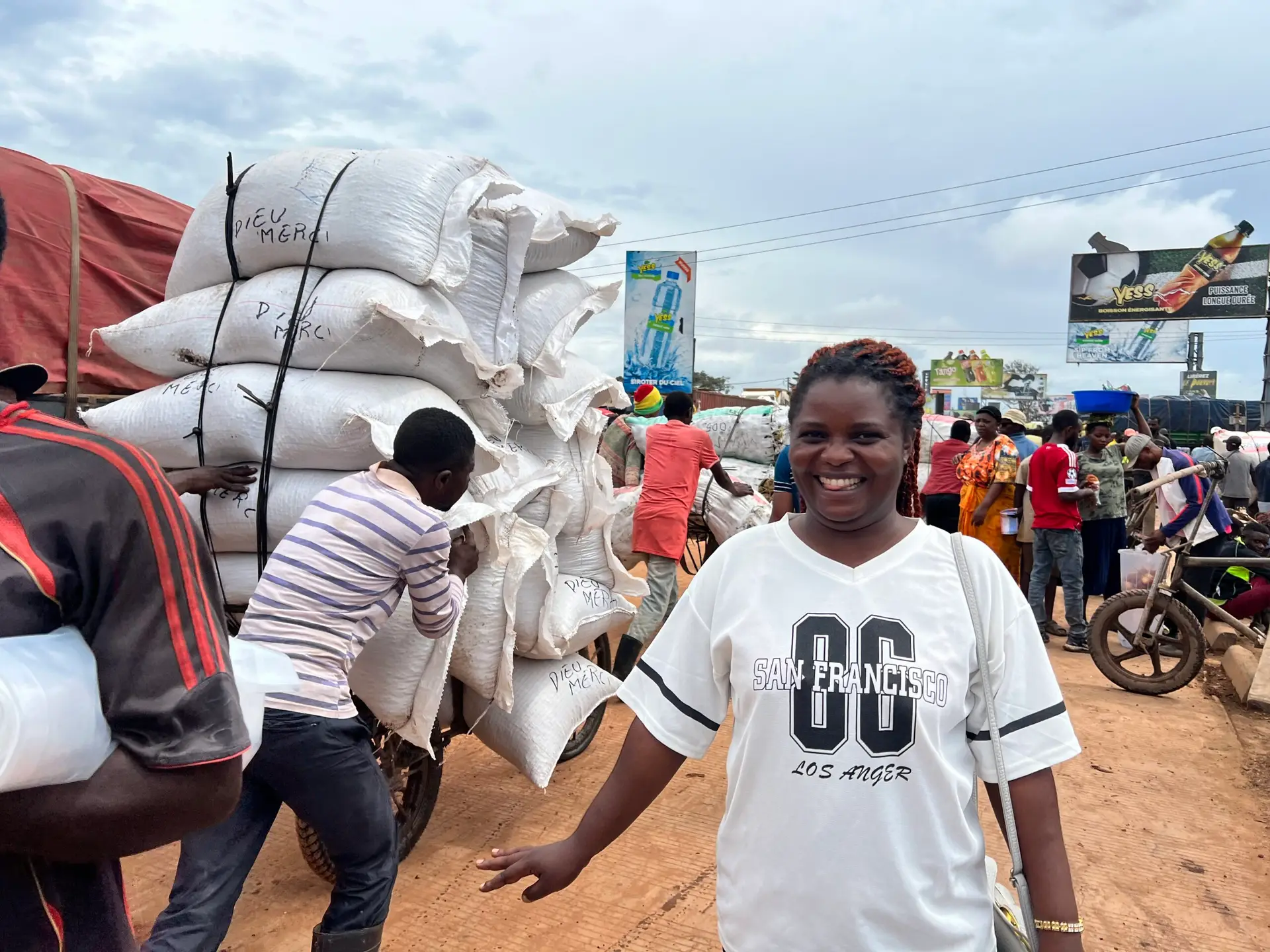
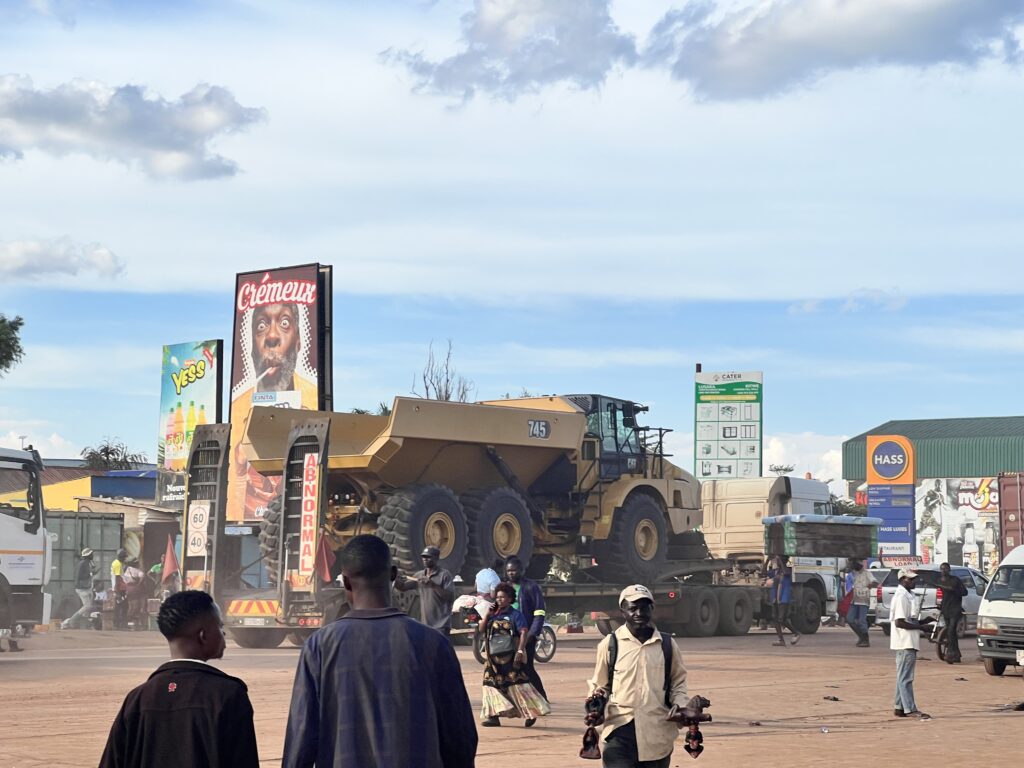
The aroma from dried fish hangs in the mid-morning air as Regina Mungandi arranges her stock beneath a corrugated iron shelter at a market in Kasumbalesa. Around her, traders haggle over prices and quantities, while a procession of trucks inches towards the busy border crossing less than a kilometre away, carrying an assortment of goods between Zambia and the Democratic Republic of the Congo (DRC).
Years ago, Regina stopped crossing to trade on the other side of the border. In her earlier trading life dealing in soft drinks, she regularly crossed into the DRC. More than once, she lost her consignment. Harassment and uncertainty were a constant reminder of how risky it was to do business across border was for her. Like many of her fellow women in small-scale cross-border trade, she retreated to the Zambian side, opting for other less risky pathways to earn a living.
A mother of three, she left a restaurant job in 2018 and went into dried fish retail business after investing 5,000 Zambian Kwacha she had painstakingly saved through a savings group. “It was not easy. Sometimes it felt like I would never attain the target that I needed to get started.”
The fish she sells is supplied by large aggregators who source it from across the region, including Malawi, Mozambique, Tanzania, Namibia, Botswana and Zambia. Buyers travel from as far as Lubumbashi, Kolwezi and Kinshasa in the DRC to purchase the fish from a designated trading point at the border. Despite the strong cross-border demand, her business growth remains constrained by limited finances. “If I had at least 50,000 Zambian Kwacha, I would go to the source and buy in bulk. I could grow much faster,” she said.
Now, Regina is learning to use a tool that could reduce the risks associated with cross-border trade. Early this year, she joined around 100 fellow traders at Kasumbalesa for an iSOKO sensitisation training, where she learned how to list products, contact buyers and compare prices. This was one of a series of trainings delivered by TradeMark Africa (TMA) in partnership with the Zambia Chamber of Commerce and Industry (ZCCI) with the support of the UK’s Foreign Commonwealth and Development Office (FCDO). Digital ambassadors guided participants in a step-by-step process for creating email accounts, setting up business profiles, uploading product photos and marketing on a broad range of platforms including the iSOKO marketplace, WhatsApp Business and Facebook.
With the training, Regina could already envision a path to reaching buyers without depending on middlemen. Her experience mirrors a wider reality at Kasumbalesa, where, according to a COMESA border profiling survey, more than 252,000 trucks and over three million pedestrian crossings were recorded in 2021. Most of those footsteps belong to small-scale traders, women carrying tomatoes, dried fish, textiles, among other items, between two economies.
Prudence Kalyalya has watched this human tide from the Trade Information Desk, where she serves as the Trade Information Desk Officer (TIDO). Her days are awash with questions from traders and other actors: What is the market price for onions in Lubumbashi? What documents do I need? What can I bring across without trouble?
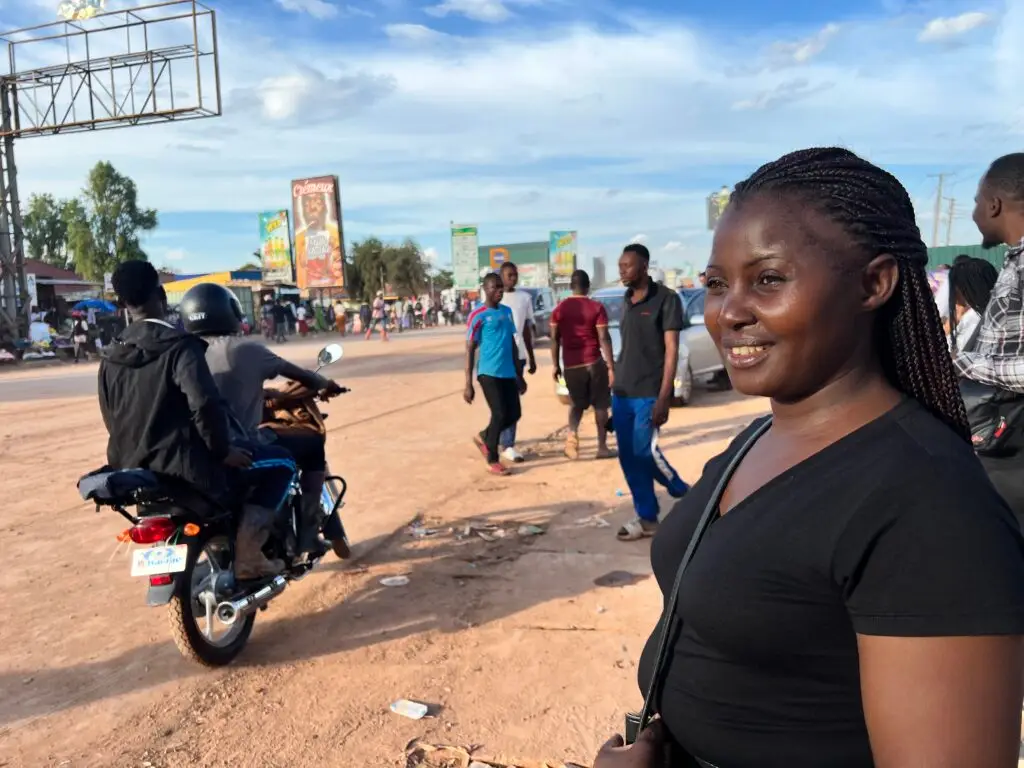
“Most of the traders come here every day,” she explained. “They order goods in the morning, sell across the border, and come back. But along the way they meet checkpoint after checkpoint, and they end up paying more than they ever expected.”
Some of her work goes far beyond availing information. When traders cross without documentation and are apprehended, more often, she helps them contact their families, arranges food while they await court dates, and ensures fines are paid so they can go back home.
Samson Kasapo, Vice Chairperson of Cross-Border Traders Association has observed a similar trend for years at the border, which teems with intermediaries from commission agents to informal money changers, who strategically position themselves between traders and the market. Their most reliable weapon is information, or its absence.
“Many of the traders coming from the DRC speak Lingala; here, they speak Bemba. Some middlemen exploit that language barrier. A trader might be told the product they are selling fetches, say, eight thousand Kwacha, when the actual price is ten thousand. Because the trader cannot argue, the difference, which could be their profit margin, is lost,” he explained.
Technology alone, however, can only do so much. The real work to drive its uptake amongst traders such as Regina, happens through a network of digital ambassadors such as Faith Chisha.
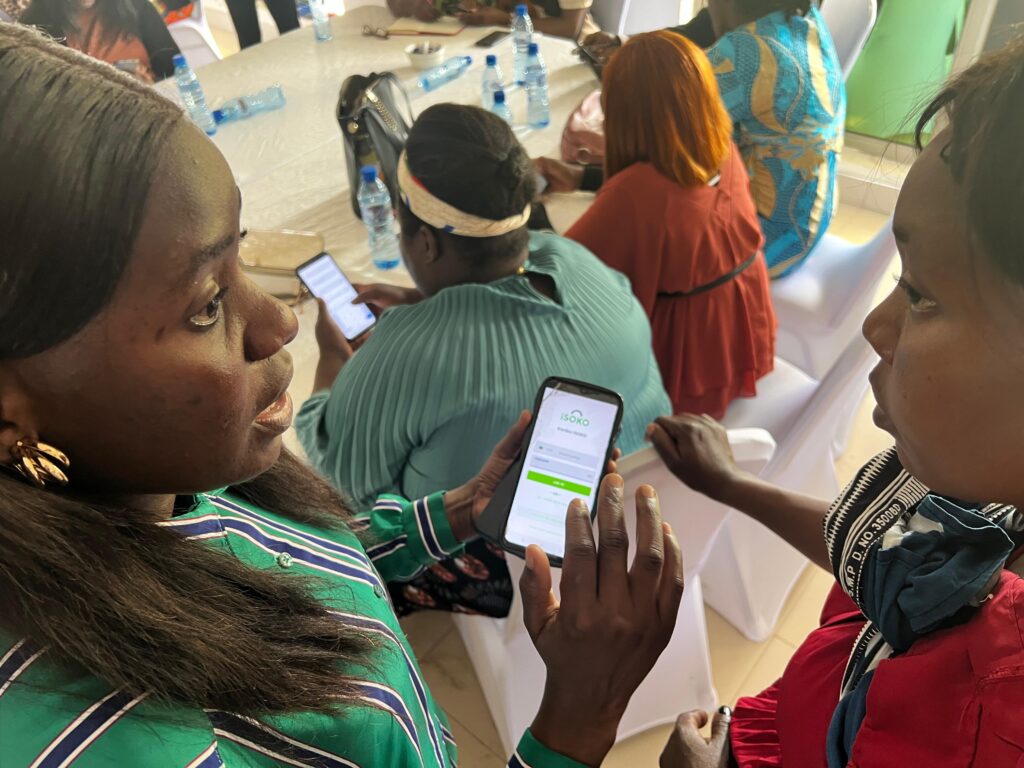
Chisha, who hails from Ndola, runs a home-based food business, preparing samosas and taking orders via WhatsApp Business. She is also one of tens of digital ambassadors in Zambia, mostly young people from the border communities in Kasumbalesa, Nakonde and Chirundu, and from as far as Sakania in the DRC, that have been trained since 2025 to advance the digital economy gospel to the last mile. Her approach begins with imparting basic digital literacy skills, including creating email accounts, setting up business profiles and the essentials of marketing products online. She also rides on her own experience of reliance on WhatsApp Business to receive orders and communicate with customers to sustain her business.
“Having a digital footprint allows traders to reach a much wider market beyond their local markets. It is not about avoiding the border, but about making trade more accessible and efficient,” she reckoned.
Similar trainings have taken place across the border in the DRC, in locations such as Haut-Katanga, implemented in partnership with the Fédération des Entreprises du Congo. In Zambia, the latest training took place in June 2026, where stakeholders converged in Siavonga to critique iSOKO and test it against the realities of the fisheries value chain to shape its next phase of evolution.
“Small-scale traders are not peripheral to regional trade. They are its human face. When we simplify customs processes and digitise trade systems, we are restoring time, dignity, and income to the women and men whose livelihoods depend on crossing borders every day,” TMA Regional Director for Southern Africa, Hope Situmbeko, observed.
For Dr. Tonny Ng’uni, the business development expert who has led much of the training, the platform’s promise goes well beyond finding buyers. “This programme is a game changer. As traders begin to sell and receive payments digitally, they build a transaction record, which is a digital collateral of sorts that they can show a bank or a microfinance institution. That can open the door for access to affordable credit that has been elusive.”
He is candid about why this matters most at border regions such as Kasumbalesa. “Not all traders want to take the risk to cross to the other side of the border to sell their products. Many women traders fail to reach the other side because of harassment, language barrier, or confusion over foreign exchange. They prefer to trade only on the Zambian side. With iSOKO, WhatsApp and Facebook, the market comes to them. The platform even carries multiple languages, so traders can express themselves as they market their goods.” The app’s reach across East and Southern Africa means a fish trader in Kasumbalesa can be found by a buyer in Uganda.
Policy has also moved in step. In April 2026, officials from both governments, border agencies, traders’ associations, the COMESA Secretariat and TMA met in Chingola, Zambia, to agree on pathways to operationalise the COMESA Simplified Trade Regime (STR) at Kasumbalesa. The STR is designed to streamline customs for traders through simplified documentation, a common list of eligible products and a $500 threshold. Both countries already adopted a Joint Action Plan to strengthen Trade Information Desks, digitise customs procedures and reduce border harassment.
None of these efforts abolish checkpoints, harassment or middlemen overnight. However, Kasapo has seen what happens when a trader can confirm the real market price on her own phone before a commission agent quotes her a false one. “If the trader can see the price for herself, the middleman loses his power,” he said.