

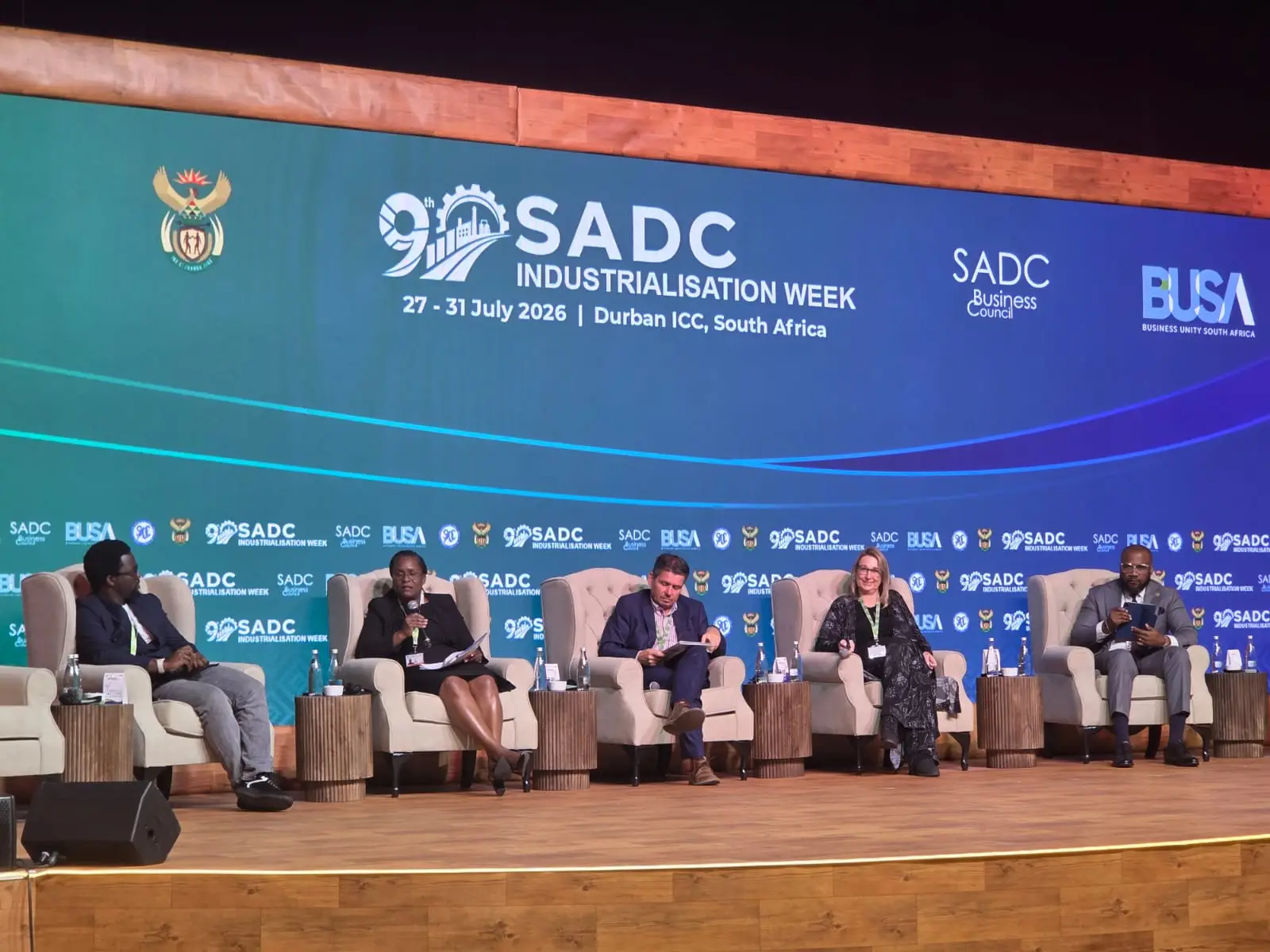
Durban, South Africa, 31 July 2026 – Southern Africa’s transport corridors must become competitive economic corridors that reduce the cost of doing business, strengthen regional value chains and enable local businesses to compete globally, delegates at the 9th SADC Industrialisation Week held from 27-31 July, heard.
The session on ‘Economic Corridors as a Catalyst for Enhanced Trade and Industrialisation in the SADC Region’ brought together the SADC Secretariat, TradeMark Africa (TMA), the private sector and development finance institutions to explore how infrastructure investments can better support regional industrialisation.
Opening the session, Dr. Dhunraj Kassee, Director of Industrial Development and Trade at the SADC Secretariat, reaffirmed that competitive economic corridors are central to delivering the SADC Industrialisation Strategy. He called for stronger regional value chains and closer collaboration between governments, business and development partners to accelerate industrialisation across Southern Africa.
Providing the private sector perspective, Hastings Nhlane, CEO of ACADES Commodities, challenged policymakers to ensure that corridor investments create value beyond large investors by opening opportunities for MSMEs, women, youth and communities along the corridors. Drawing on ACADES’ regional grain business, he highlighted a stark competitiveness challenge, citing a specific example of cases where rice exported within the region costs around $1,200 per tonne, compared to imported Thai rice at about $500 per tonne.
Summing up the private sector perspective, Nhlane noted that regional businesses are not only competing with one another but also with large global suppliers. Competitive economic corridors are important if Southern African producers are to win that competition. He called for greater productivity, improved border efficiency, streamlined payment systems and harmonised regional standards and certification to reduce the cost of doing business and make regional trade more competitive.
Responding to these challenges, Hope Situmbeko, Regional Director for Southern Africa at TradeMark Africa, emphasised that “infrastructure alone does not create trade.” She noted that “a transport corridor moves what an economy already produces; an economic corridor changes what that economy is capable of producing.”
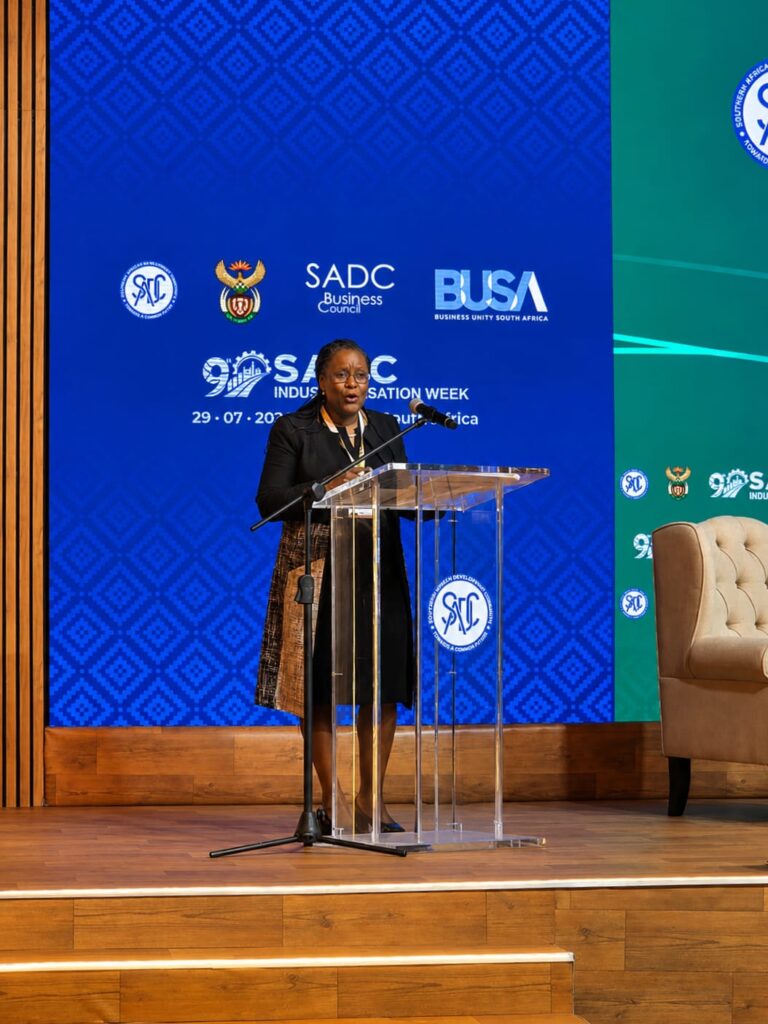
She highlighted TMA’s work with parters to convert infrastructure into pillars that support the competitiveness of businesses through border modernisation, customs-to-customs digital connectivity, coordinated border management, corridor governance and standards interventions. These initiatives are geared towards reducing the time, cost and uncertainty of regional trade.
The discussion echoed the commitments adopted in the Durban Declaration, which calls for stronger regional value chains, greater public and private investment, improved trade facilitation, support for MSMEs and closer collaboration between governments, business and development partners to build a more competitive regional economy.
As delegates concluded, one message stood out: Infrastructure is the foundation, but competitiveness is the destination. Only competitive economic corridors will enable Southern Africa’s businesses to grow, industrialise and compete successfully in regional and global markets.