
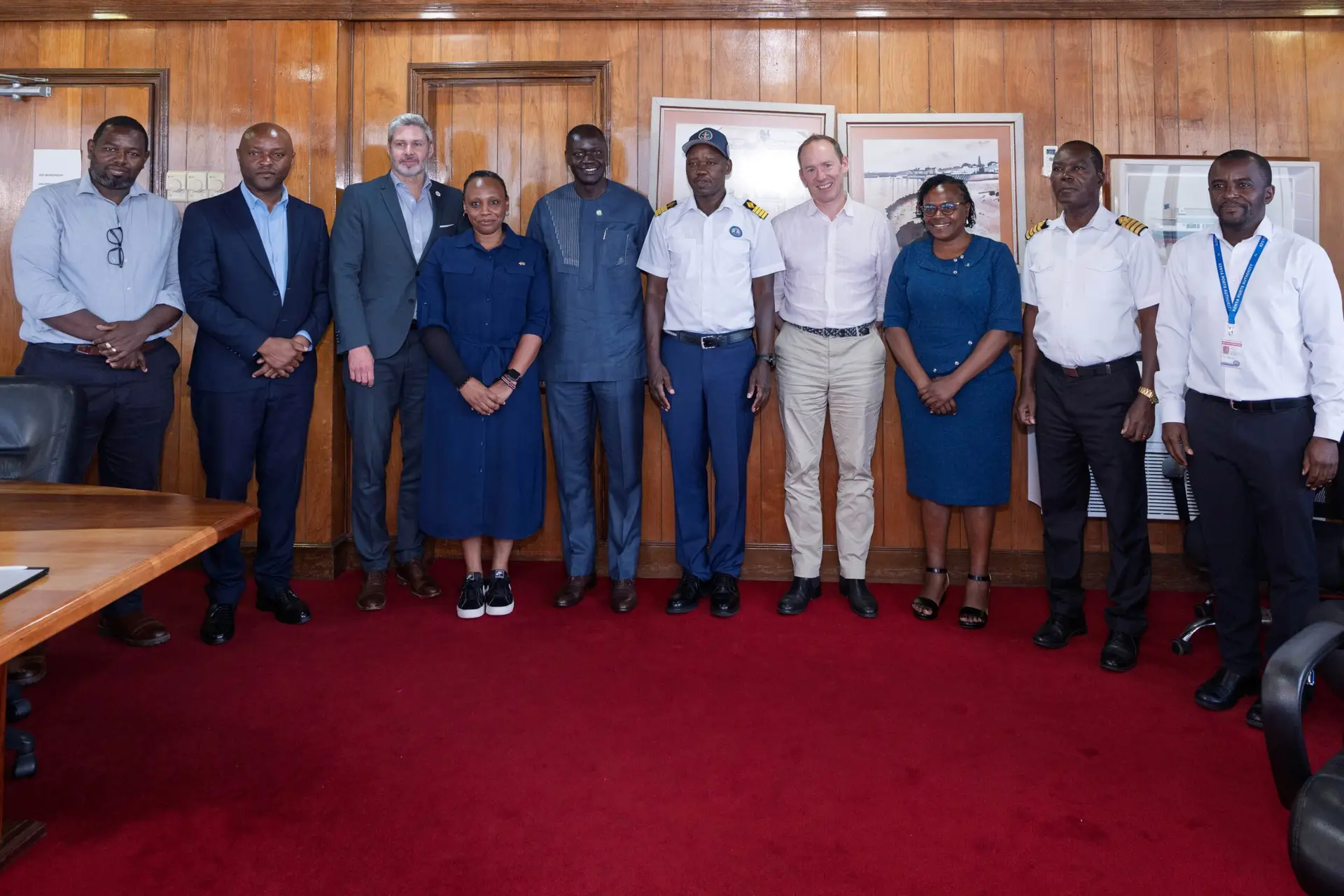
MOMBASA, 14 October 2026 – The Port of Mombasa is handling more cargo than ever, and its chief, says the next phase of growth will depend on faster gates, increased investment and coordinated partner support.
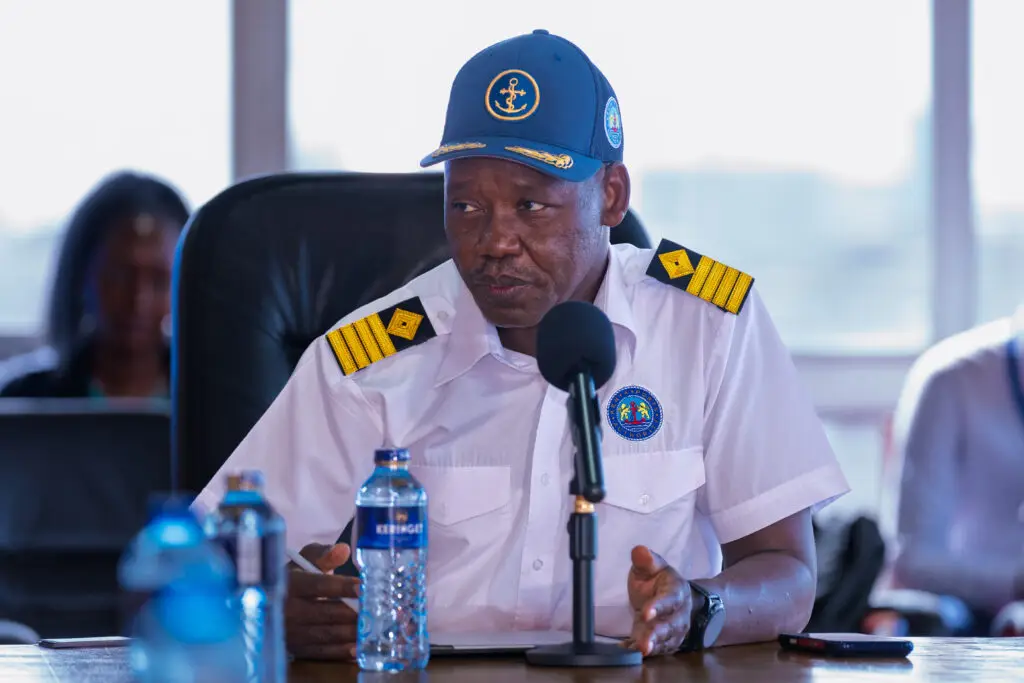
“Demand has now outpaced capacity,” Capt. William Ruto, Managing Director of the Kenya Ports Authority (KPA), told a delegation consisting of the British High Commissioner to Kenya, Matt Baugh, Kenya’s High Commissioner to the United Kingdom, Amb. Maurice Makoloo, and TradeMark Africa (TMA) Chief Executive David Beer, in a meeting at KPA headquarters on Wednesday.
Mombasa handled a record 45.45 million tonnes of cargo in 2025, up 10.9% on the previous year, including 2.11 million twenty-foot equivalent units (TEUs) of containers. Transit cargo bound for Kenya’s neighbours grew faster still, rising 19.5% to 15.88 million tonnes, with growth led by Uganda, Rwanda and the Democratic Republic of Congo (DRC).
Faster gates, fewer queues
With up to 5,000 trucks passing through the port each day, Capt. Ruto said the some of the quickest gains lie with automation the gates. Gate 24 and Gate 25, for instance, whose automation into smart gates is on-going, with support from TradeMark Africa, now handles at 50-60% of the port’s traffic. The automation is designed to replace separate manual recording by KPA, the Kenya Revenue Authority and other agencies with a single digital platform.
“If the trucks bringing exports are not facilitated to enter the port faster, then we will not be able to support our exporters,” he said. He described the smart gate automation as “only phase one”, and said KPA hopes to automate other gates, including the one which carries most of Kenya’s tea exports. Fresh produce already moves through a green channel.
A port open for investment
Capt. Ruto invited British investors to look at opportunities in maritime and cyber security, automation, e-mobility and green port initiatives such as shore power. “In trade, it takes two to tango,” he said, adding that he would present the port’s prospects at the International Association of Ports and Harbors (IAPH) World Ports Conference in London next month.
The Port of Mombasa’s reach extends far inland. Capt. Ruto described how navigation aids and beacons installed on Lake Victoria now allow cargo vessels to operate day and night. They also mark out shipping lanes so that the lakeside communities who depend on fishing know where commercial vessels pass. He said more aids are needed to demarcate the lake’s routes fully.
Mr Baugh called Mombasa “the entry and exit of Kenya into the global trading system”, and asked how partners could “behave and act differently” to make the authority’s work easier. He cited the port-to-port cooperation between the UK and the Netherlands as an example of coordinated support, and warned against fragmented, one-to-one efforts that add to a port’s burden.
Amb. Makoloo, who is also Kenya’s Permanent Representative to the International Maritime Organization, linked the port’s future to the growth of the economies it serves, and noted that Kenya–UK trade stands at about £2 billion, with both governments aiming to double that by 2030 under the Kenya-UK Strategic Partnership. “All these efficiencies you are delivering contribute significantly to realising these ambitions,” he said.
From quayside to supermarket shelf
TMA CEO, David Beer thanked KPA for its “very strong, close collaboration”, noting that the UK has been the largest supporter of TMA work with the authority. “One thing that is particularly encouraging is that the work we do is leading to real, concrete results,” he said.
He said TMA is exploring how to support investment facilitation for the port’s planned partnerships, including feasibility studies. TMA is already undertaking initiatives designed to build a reliable cold chain so that horticulture exporters can shift from air to sea freight, while a lower-carbon corridor would help position Kenyan exports as “the ethical choice” in markets such as the UK.
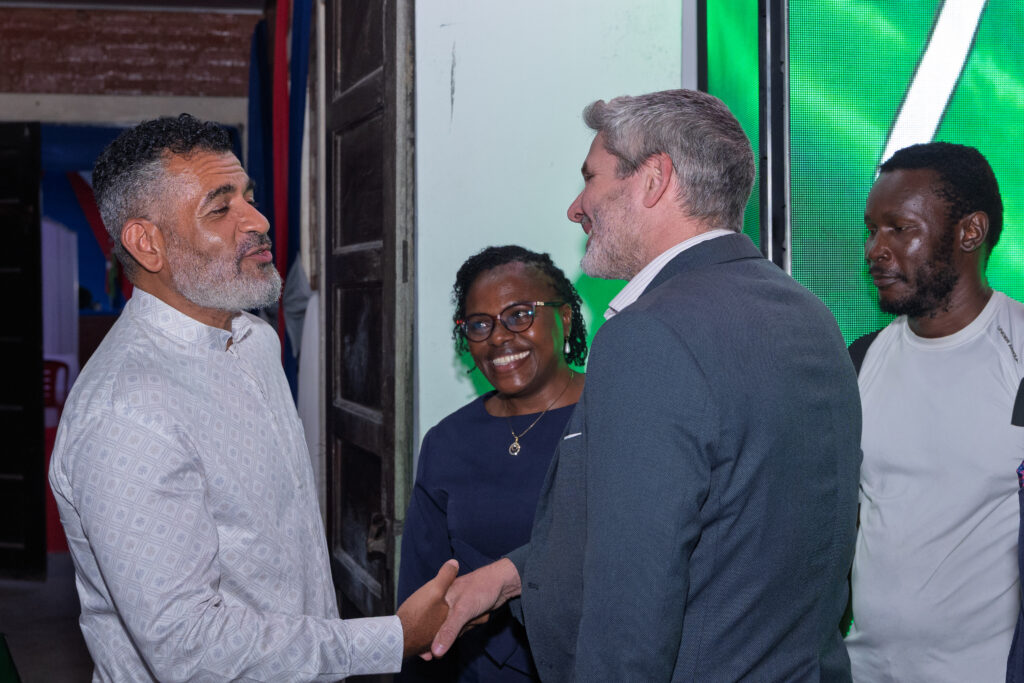
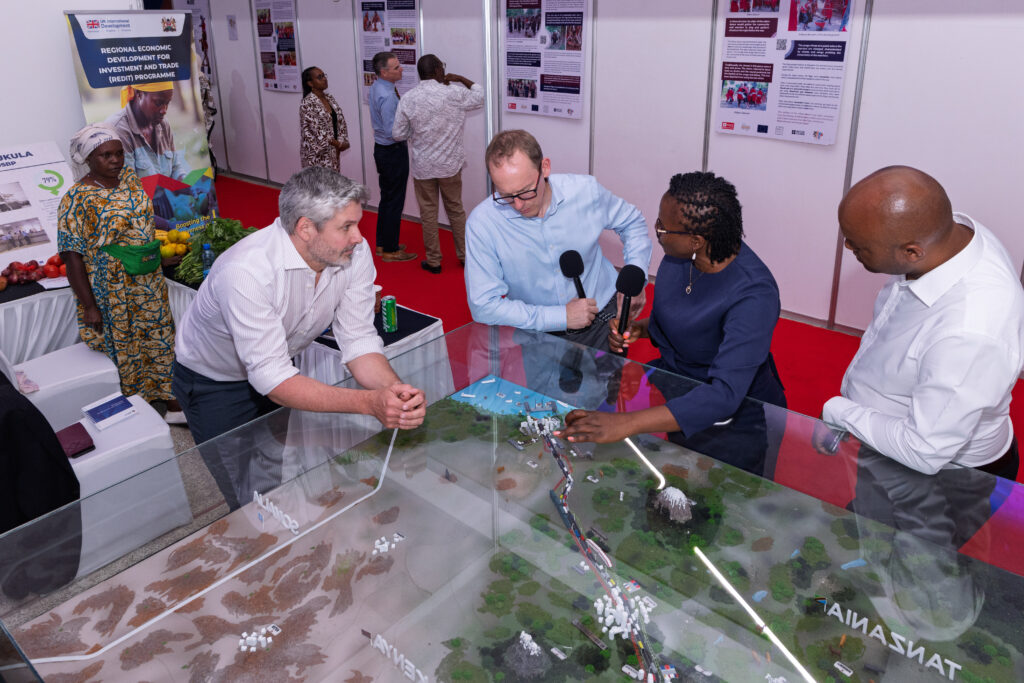
The visit capped two days in Mombasa for the British High Commissioner. On Tuesday, the British High Commission held its first-ever pop-up High Commission at Tononoka Hall, where TMA showcased a model of trade flows along the Northern Corridor. At the evening reception, Mombasa’s Governor credited the partnership with TMA for infrastructure works that have enhanced mobility and ended flooding along the Mbaraki outfall, road works around Jomvu, and a feasibility study for the county’s planned special economic zone.