
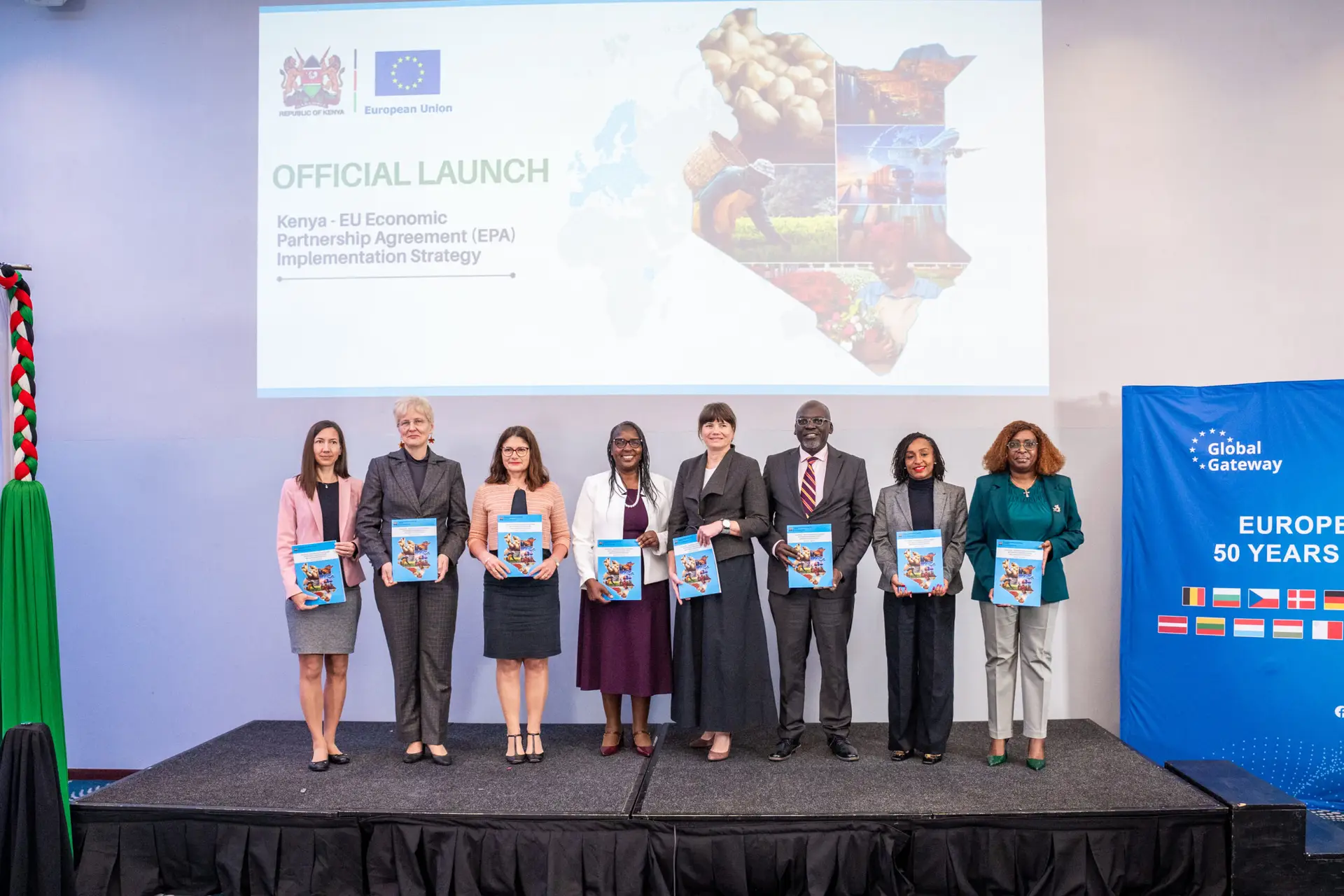
Nairobi, Kenya, 9 July 2026 – Kenya has launched the Kenya-European Union (EU) Economic Partnership Agreement (EPA) Implementation Strategy, unveiling a coordinated roadmap to transform preferential market access into increased exports, investment, industrial growth and jobs. This also positions Kenyan businesses to compete more effectively in one of the world’s largest consumer markets.
The Strategy was launched in Nairobi by Principal Secretary for Trade Regina Ombam on behalf of the Cabinet Secretary for Investments, Trade and Industry, Hon. Lee Kinyanjui. The event brought together EU Ambassador to Kenya Henriette Geiger, TradeMark Africa (TMA) Kenya Country Director Lillian Mwai Ndegwa, the Kenya Association of Manufacturers (KAM), and other private sector players.
The Strategy marks the next phase of the Kenya-EU Economic Partnership Agreement, which entered into force on 1 July 2024, granting Kenya duty-free and quota-free access to the European Union market. During the launch officials stressed that market access alone is insufficient unless businesses are equipped to fully exploit the opportunities it presents. The full Kenya-EU EPA Implementation Strategy is available for download

“We must deliberately position our businesses to seize the opportunities created by the Agreement through coordinated action by Government, the private sector, development partners and other stakeholders. The true measure of our success will be reflected in increased exports, expanded investment, stronger industries, enhanced competitiveness and improved livelihoods for the people of Kenya,” PS Ombam said.
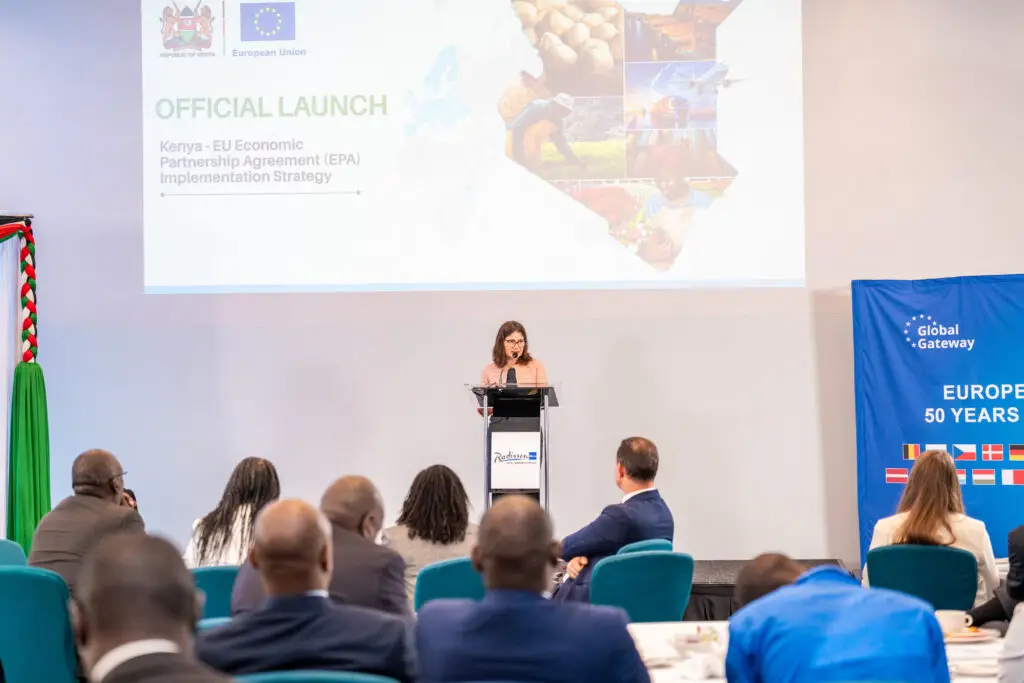
EU Ambassador Henriette Geiger described the Strategy as the mechanism that will help convert the EPA into tangible economic results. She noted that Kenya’s trade relationship with the European Union remains one of the country’s most balanced trading partnerships and said the Agreement extends well beyond preferential market access by supporting investment, industrialisation, sustainable trade, value addition and regional integration. She also encouraged Kenyan businesses to diversify beyond traditional agricultural exports while expanding value addition across existing export value chains.
“Since the entry into force of the agreement, our trade has already grown by 20%. This is not enough; we want to double our trade in the coming years, and we need all hands on deck to do it. That means thinking outside the box, and the implementation strategy is our roadmap for identifying the areas where we can concentrate our firepower,” she said.

TMA Kenya Country Director Lillian Mwai Ndegwa said the programme demonstrates how the EPA is already moving beyond policy into practical implementation. “This Strategy provides the roadmap that will translate the EPA from a trade agreement into practical actions that expand exports, strengthen competitiveness, attract investment and create jobs. Today, many of its priorities are already being delivered through the EU-funded Business Environment and Export Enhancement Programme (EU-BEEEP), demonstrating the European Union’s long-term commitment to ensuring the EPA translates into tangible benefits for Kenya’s economy.”
She highlighted several early achievements under the programme, including more than 7,000 farmers accessing export markets through the Makueni Export Supply Hub, exporting over 4,800 metric tonnes of fresh mangoes valued at more than $5 million while supporting over 26,000 jobs.
The EU-BEEEP also seeks to shift 50% of Kenya’s fresh produce exports from air to sea and rail by 2030, reducing logistics costs, improving competitiveness and lowering emissions.
KAM Chief Executive Tobias Alando said the Strategy tackles both supply-side constraints – standards, SPS requirements, and customs procedures – and demand-side opportunities in the EU market, building on a nationwide engagement drive that reached more than 1,000 stakeholders.
“This effort has been successful because of the partnership we have established across government, the private sector, and EU embassies,” he said.