
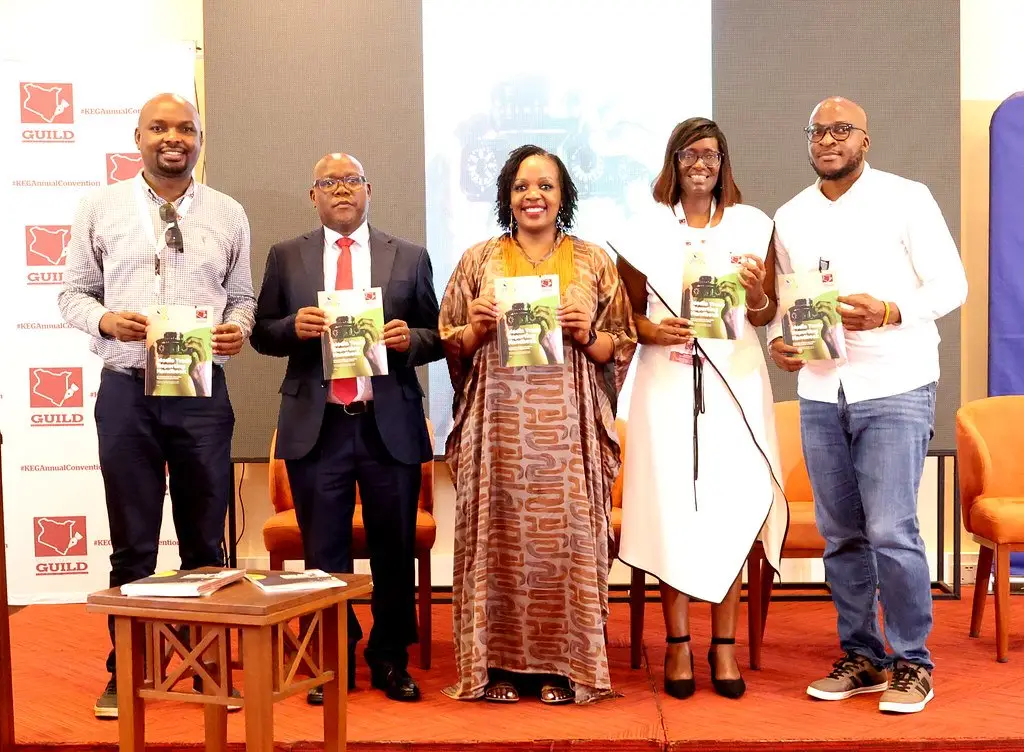
Mombasa, 26 November 2026: Trade decides what bread costs and whether a young person gets a job. Yet few news stories explain it in plain words. A new handbook aims to shift that narrative. The Kenya Editors Guild (KEG) and TradeMark Africa (TMA) launched the Media Trade Reporting Handbook on 26 November at the KEG Annual Convention in Mombasa. It is a practical guide for reporters, sub-editors, editors and producers on a beat that touches every household but is too often under-reported or reported in terms few readers can follow.
The venue was apt. Containers are lifted, cleared and loaded onto trucks at the port of Mombasa every day, bound for Kampala, Kigali and beyond.
“Every one of those containers holds a story about prices, jobs, livelihoods economic growth and development. Very few are ever told in a way that speaks to the everyday reader, listener or viewer,” remarked Benedict Musengele, Director of Trade and Customs at TMA.
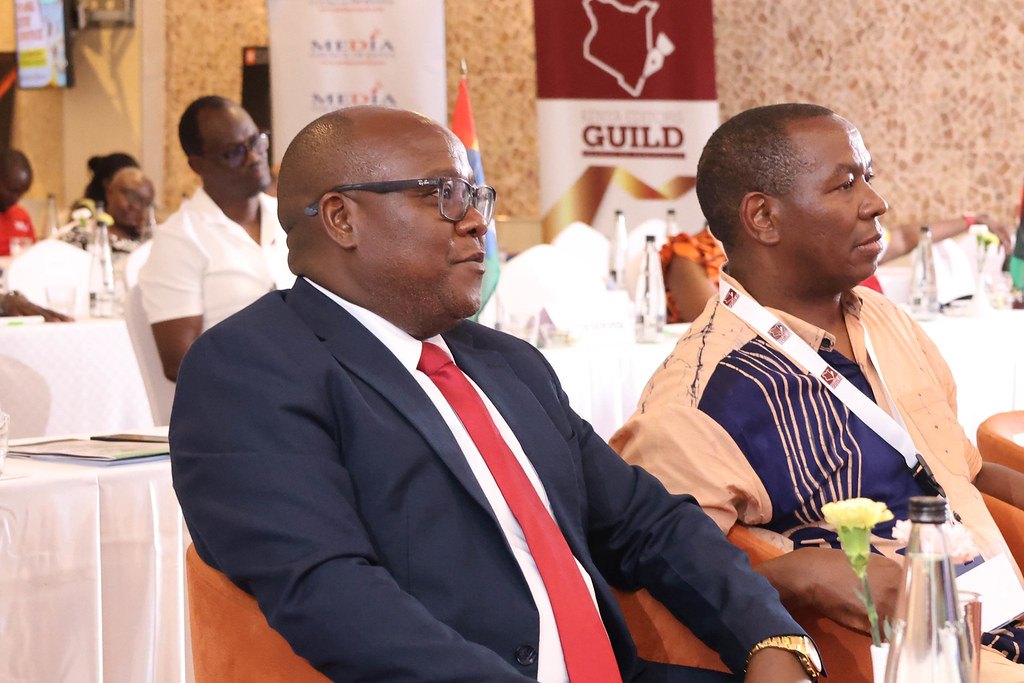
He noted that trade reporting is often portrayed in the language of the negotiating room, namely, tariffs, non-tariff barriers, rules of origin among others. The conversation tends to stay among elites. The handbook was born out of the conversation at an Editors’ Roundtable convened by KEG and TMA in October 2025, where editors said the subject is technical, the institutions are many and the data is easily misread.
KEG President, Zubeidah Kananu said the problem goes beyond trade, noting that journalists often steer clear of subjects they find too complex, and coverage tends to follow an event or a press conference rather than lead it. She encouraged journalists to make use of the new manual.
“Such manuals matter even more because many experienced journalists trained several years ago, while many younger reporters now enter newsrooms straight from school. It is therefore important to train and equip emerging journalists, and to pass on knowledge and experience so that they can report more effectively on specialised subjects,” she said.
Acknowledging that “Good trade journalism is not cheerleading, it is accountability with a human face,” Musengele noted that the handbook does not set out to turn reporters into economists. It teaches them to start with people, such as the market trader, the truck driver and the woman crossing a border on foot, and to follow the policy that shapes their day. It also seeks to help journalists ask better questions: who gains, who pays and what do the numbers really say. When a reporter can follow a container from the port to the shelf, a dry tariff schedule becomes a story any reader can understand
The handbook has seven sections. They run from why trade matters, through the rules and institutions that govern it, to reporting from borders, verifying data, choosing story formats, and working ethically and safely. Plain-language “Jargon Buster” boxes, case studies from across the continent, and annexes of checklists, interview guides and a story-pitch template make it usable at a desk or a border post.
The handbook is also firm on standards. It asks journalists to test announcements against evidence, to disclose sponsored travel and other conflicts of interest, and to avoid framing informal traders as criminals.
Third in a series
The handbook is the third specialist reporting manual produced by KEG. The first, on climate change, was described as the first of its kind in Africa; it is available online and has been used to train editors. The second, on biotechnology, was launched recently.