
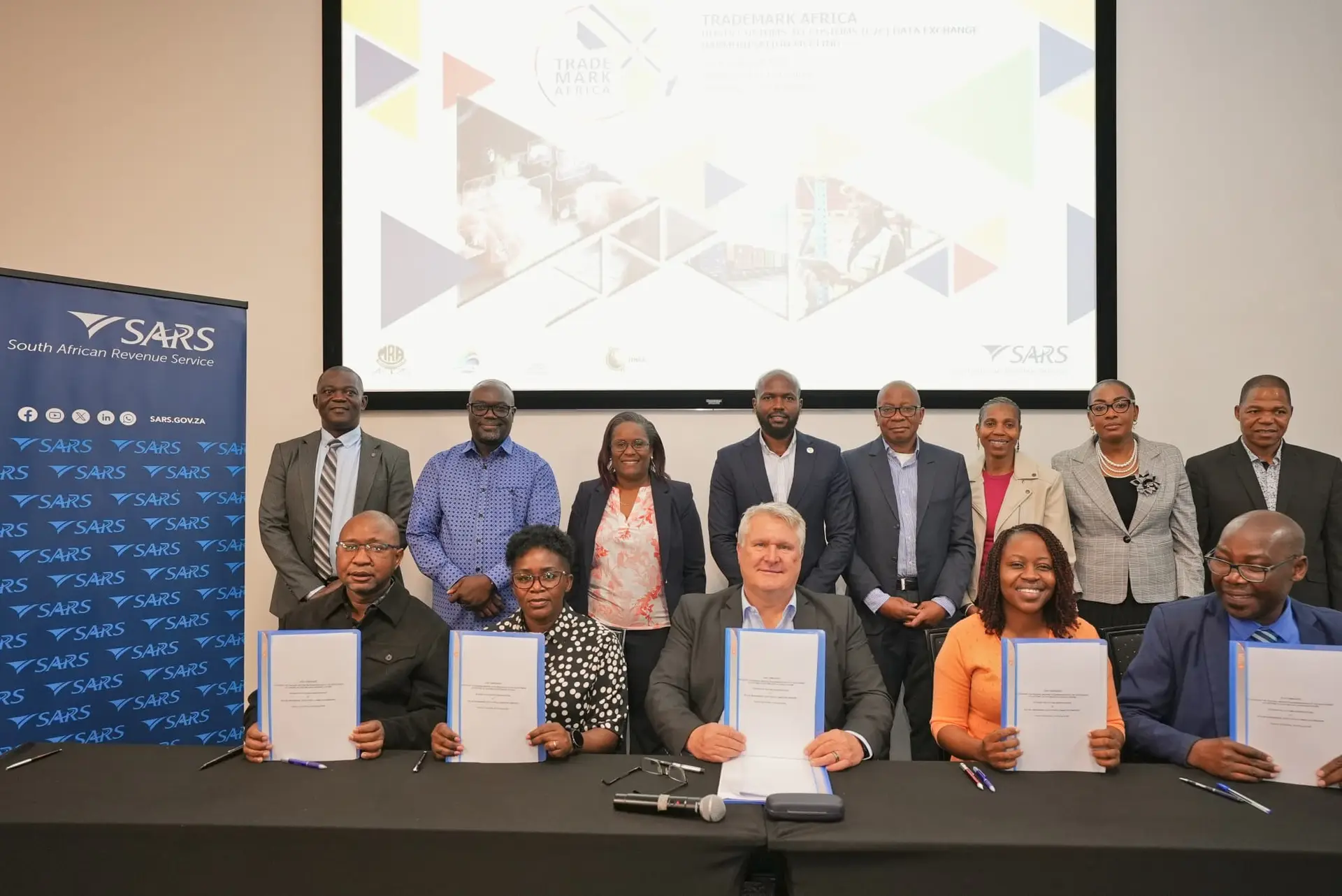
Customs administrations from Malawi, Mozambique, South Africa, Zambia and Zimbabwe agree to a pathway for harmonising Customs-to-Customs data exchange, to enable customs information to move ahead of cargo and supporting faster, more predictable and secure movement of legitimate trade across Southern Africa.
Pretoria, South Africa – 26 August 2026. Customs administrations from five Southern African countries have agreed a common roadmap to interlink their systems and allow trade information to move ahead of the goods, a shift they say will speed up cargo clearance, tighten revenue collection and help curb illicit cross-border flows.
Meeting in Pretoria from 24 to 26 August 2026, senior customs, legal and ICT officials from Malawi, Mozambique, South Africa, Zambia and Zimbabwe adopted a joint Roadmap and Action Plan to guide the development and rollout of Customs-to-Customs (C2C) data exchange across the region. The three-day meeting was hosted by the South African Revenue Service (SARS) and convened by TradeMark Africa (TMA), with the Southern African Development Community (SADC) Secretariat also taking part.
The five customs administrators reaffirmed their commitment to C2C cooperation as an instrument for improving corridor performance, enabling pre-arrival processing, strengthening risk management, enhancing revenue assurance, increasing transparency and speeding the movement of compliant goods.
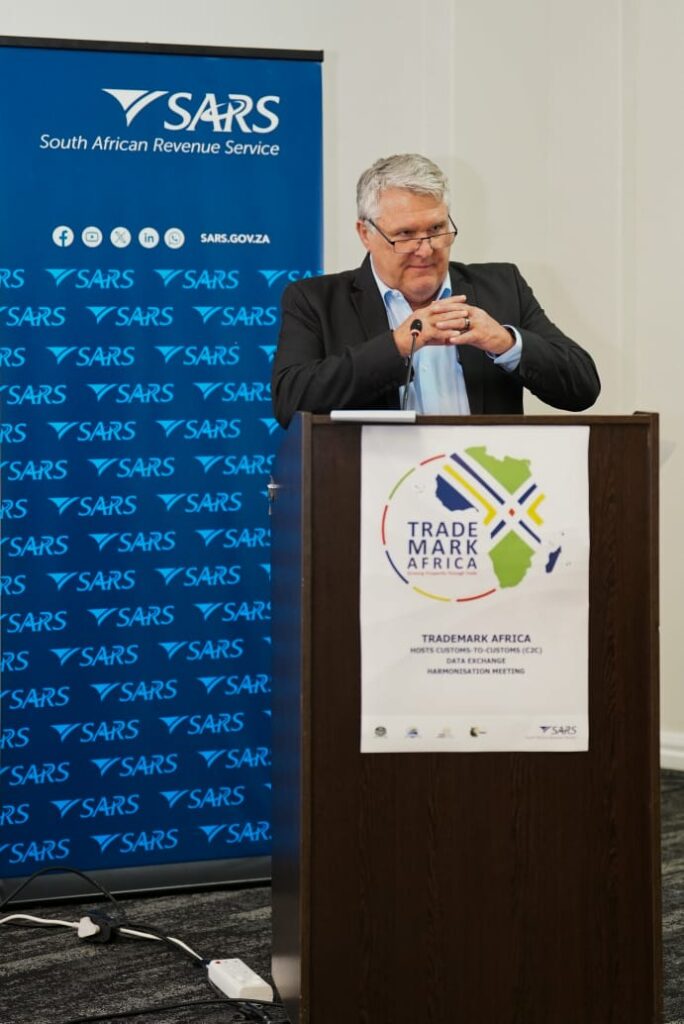
Beyers Theron, SARS Director for Customs and Excise, said customs administrations face the shared challenge of facilitating legitimate trade while protecting revenue, safeguarding economies and managing compliance risks. He called for a shift from enforcement-heavy approaches to an assurance-based, facilitation-oriented model, where borders become points of confirmation rather than delay.
He described Customs-to-Customs data exchange as a strategic tool for accelerating legitimate trade, improving predictability at borders and strengthening the region’s collective ability to detect and combat illicit trade.
“When neighbouring customs administrations exchange trusted information securely and efficiently, the benefits extend beyond our institutions. Traders experience faster and more predictable processes, governments strengthen revenue assurance, border agencies make better-informed decisions, and our region becomes more connected and competitive,” he said.
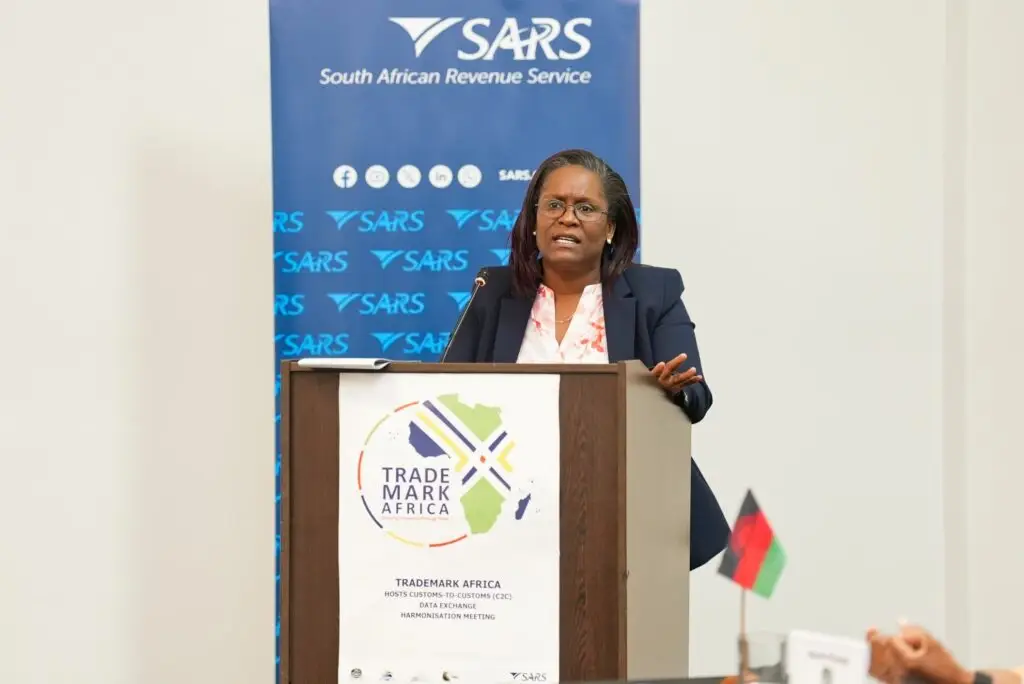
TMA Regional Director for Southern Africa Hope Situmbeko highlighted how border delays undermine regional manufacturing. Producing electrical cables, for example, may require copper, polymers, specialised additives and machinery sourced from several countries. Each input must cross a border, increasing the risk of delays that can disrupt production and raise costs.
Every unpredictable border transaction adds cost, ties up working capital and makes it harder to add value within the region than simply to export raw commodities. “Information should not have to wait for the truck,” she said, adding that the real test of C2C is operational rather than technical.
“A competitive factory creates employment. It purchases services. It pays salaries. It generates corporate income. It supports suppliers and logistics companies. It exports. It creates economic activity from which governments collect revenue in many different forms. In that sense, trade facilitation and revenue mobilisation need not be competing objectives. Good C2C systems can strengthen both. Better advance information can improve risk management and revenue assurance while allowing compliant trade to move faster,” she noted.
Drawing on SADC’s contribution to the meeting, Ally Alexander Mwangolombe of the SADC Secretariat said Customs-to-Customs data exchange offers a practical pathway to digitally-enabled interoperability and more efficient trade corridors. He emphasised that digital corridors should reduce repeated documentation and unpredictable delays, particularly for smaller traders, while ensuring that SMEs, young entrepreneurs and women engaged in cross-border trade benefit from more efficient regional markets.
The meeting agreed that implementation may be phased, beginning with priority corridors, and that the bilateral C2C data-exchange links already underway, including operational connections between Zambia and Malawi, and between Zambia and Zimbabwe, provide the foundation for a progressively harmonised regional system. Ultimately, the process is expected to pave the way for the establishment of Smart Corridors, advancing the region’s long-term vision of moving from One-Stop Border Posts to “Non-Stop Borders”.
The stakes are high. Southern Africa accounted for about 41% of intra-African trade, roughly $192 billion, in 2023, according to Afreximbank, underlining the potential gains from faster, safer and more predictable cross-border trade. The parties committed to the timely implementation of the roadmap and to continue collaborating to enhance the performance of the region’s trade corridors.