
Ethiopia has opened its logistics sector to full foreign ownership, removing the 49% cap that had long limited outside participation in one of East Africa’s most important trade markets. The reform could draw in capital, technology and international operating standards, and its success will depend on whether rules, institutions and local firms can adjust quickly enough to make goods move faster and more predictably.
The policy shift was a central point of discussion at the United Kingdom-Ethiopia Trade and Investment Forum in London on 18 June, where private sector interest in Ethiopia’s reform agenda was clear. Investors are watching a wider set of changes, including capital market liberalisation, Ethiopia’s pursuit of accession to the World Trade Organization by early 2027, and major infrastructure plans such as the $13 billion Bishoftu International Airport, located 45 kilometres southeast of Addis Ababa and expected to become Africa’s largest airport on completion in 2030. Annual trade in goods and services between the United Kingdom and Ethiopia stands at approximately $900 million (£700 million) and is growing. Together, these measures point to a country seeking a larger role in regional and global trade.
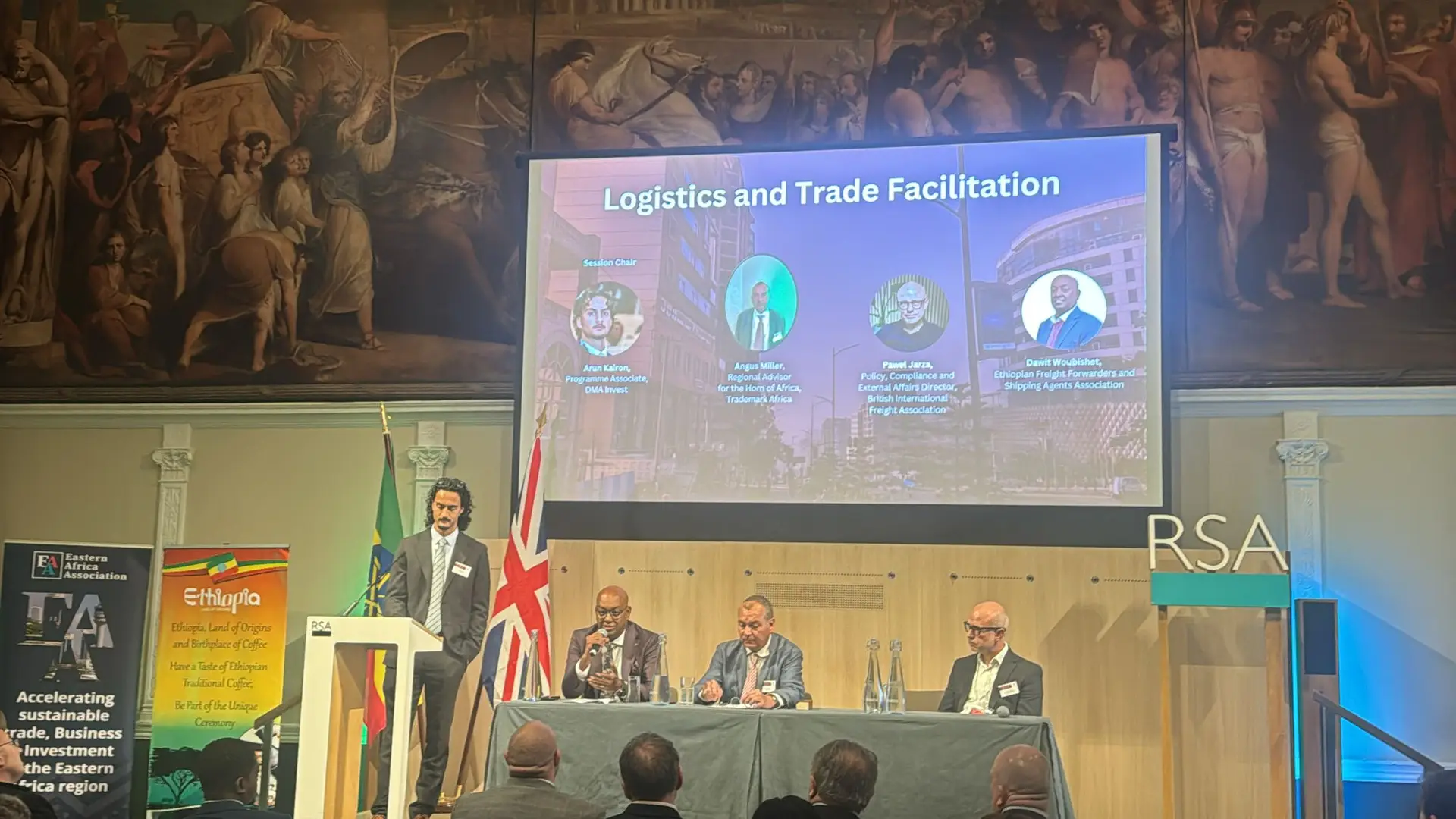
TradeMark Africa’s engagement at the forum focused on what it will take to translate this reform into practical outcomes for Ethiopia’s logistics sector. Through United Kingdom-supported programming, TradeMark Africa facilitated discussions between the British International Freight Association and the Ethiopian Freight Forwarders and Shipping Agents Association to shape the next phase of support under the Foreign, Commonwealth and Development Office programme in Ethiopia for 2026 to 2028. TradeMark Africa also led the logistics and trade facilitation session, alongside Dawit Woubishet, President of the Ethiopian Freight Forwarders and Shipping Agents Association, and Pawel Jarza, Director of the British International Freight Association, with discussions focused on the role of efficient logistics in economic competitiveness and sector modernisation.

As Angus Miller, TradeMark Africa’s Regional Adviser for the Horn of Africa, noted: “Getting to know people, understanding what will work or not, and navigating between financiers who expect results and local institutions and private sector players who face their own pressures and priorities is central to making progress.”
That point goes to the centre of Ethiopia’s reform challenge. Lifting the ownership cap is an important signal, but it will not deliver results on its own. Foreign firms entering the market will need regulatory clarity, predictable implementation and credible local partners. Local logistics providers will also need the capacity to compete, adapt and grow within a more open market. The question is not only whether new investors come in, but whether reform strengthens the wider logistics ecosystem in ways that improve service quality, reduce costs and support trade across corridors.
This is where TradeMark Africa’s work with sector partners is focused. The proposed three-year collaboration with the British International Freight Association and the Ethiopian Freight Forwarders and Shipping Agents Association is expected to support a learning and knowledge management platform for Ethiopian freight forwarders, strengthen logistics sector training, and deepen technical support to local providers. The partnership would also help build long-term business relationships between United Kingdom and Ethiopian firms, creating a practical channel for trade, investment and knowledge exchange.
Sustainability is also part of the reform conversation. Ethiopia is pursuing a major energy transition in transport, with logistics expected to play an important role. Discussions at the forum explored whether electric freight solutions could be piloted in first-mile and last-mile transport, where practical testing may help determine what works in the Ethiopian context. This would complement wider efforts to improve logistics performance while reducing emissions.
The forum also highlighted the importance of visibility and confidence-building. Ethiopia is expected to host major global platforms in 2027, including the International Federation of Freight Forwarders Associations World Congress in Addis Ababa in October and the United Nations Climate Change Conference later that year. These moments offer an opportunity to demonstrate reform progress, showcase improvements in logistics efficiency and green performance, and attract further investment into the sector.

The emphasis now is on delivery. Investor confidence will depend on clear timelines, coherent regulatory frameworks and consistent implementation. For Ethiopia, success will be measured by whether goods move faster and more predictably, whether corridor reliability improves, and whether local firms are better positioned to compete in regional and global markets.