
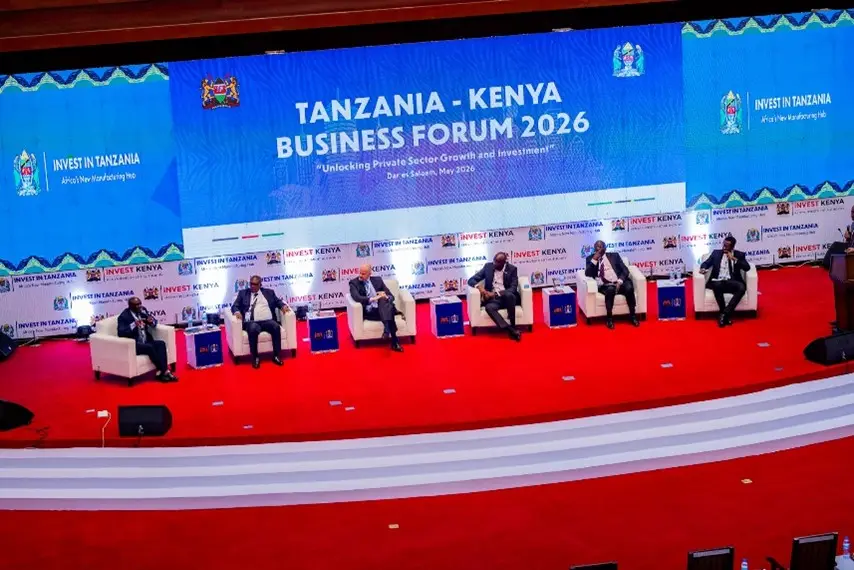
Dar es Salaam, 4 May 2026: The Tanzania-Kenya Business Forum 2026 brought together more than 1,300 public and private sector leaders this week to advance cross-border trade, investment and regional integration. TradeMark Africa (TMA) supported the Forum, held in Dar es Salaam during the State Visit of H.E. Dr William Samoei Ruto, President of the Republic of Kenya, hosted by H.E. Dr Samia Suluhu Hassan, President of the United Republic of Tanzania.
The Forum was convened with regional and national business institutions, including the Tanzania Chamber of Commerce, Industry and Agriculture (TCCIA) and the Kenya National Chamber of Commerce and Industry (KNCCI). Held under the theme “Unlocking Private Sector Growth and Investment,” discussions centred on converting political alignment into practical outcomes for businesses operating across East Africa.
At the presidential level, both Heads of State reaffirmed their commitment to deepen bilateral trade and industrial cooperation. President William Samoei Ruto emphasised the role of regional industrial initiatives and infrastructure linkages in supporting competitiveness and value addition. President Samia Suluhu Hassan underpinned the importance of structured dialogue and coordination to ensure joint investments generate jobs, value addition and expanded trade opportunities.
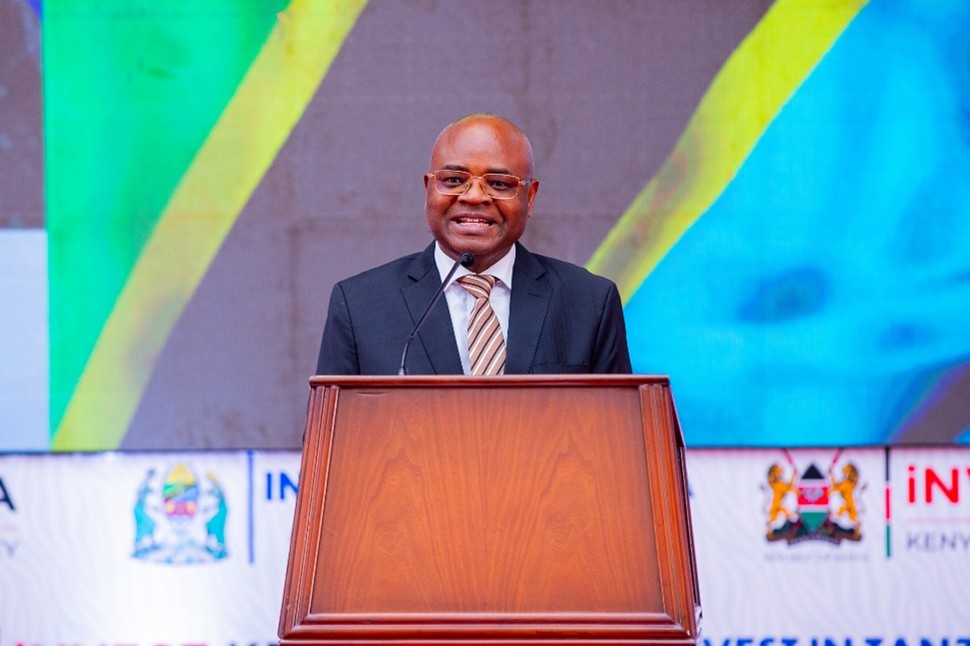
Hon. Prof. Kitila Alexander Mkumbo (MP), Minister of State, President’s Office – Planning and Investment, highlighted the case for closer economic cooperation between Tanzania and Kenya across trade, logistics, agriculture, energy and the digital economy.
“Our priority is to build a predictable and competitive environment that allows businesses in both countries to invest and trade with confidence. By developing regional value chains based on complementarity, Tanzania and Kenya can strengthen East Africa’s position in regional and global markets,” said Prof. Mkumbo.
Participants reviewed progress in bilateral trade and examined where further gains remain possible. Non-tariff barriers (NTBs), particularly in agriculture, continue to shape costs, delivery times and market access. Addressing them remains central to the East African Community’s ambition to raise intra-regional trade to 40% by 2030.
Since 2007, countries in the region have resolved more than 270 NTBs. The Forum noted that sustained political commitment, aligned policy frameworks, consistent application of standards, mutual recognition arrangements and wider use of digital systems provide a firm basis for eliminating remaining barriers by June 2026.
Discussions pointed to the growing role of digital trade and agriculture platforms in improving transparency, coordination and NTB resolution. Participants called for wider use of no-stop border posts, customs-to-customs information exchange, pre-arrival clearance, and digitised permits and certificates, including certificates of origin and electronic phytosanitary (ePhyto) systems. Risk-based inspections, including Authorised Economic Operator (AEO) programmes, were recognised as tools for speeding up trade for compliant businesses.
The Forum also examined the movement of perishable goods. Logistics costs in the region remain high. However, investment in cold-chain infrastructure, consolidation centres and reefer logistics, alongside rail connections, offers scope to improve reliability and competitiveness through public-private partnerships.
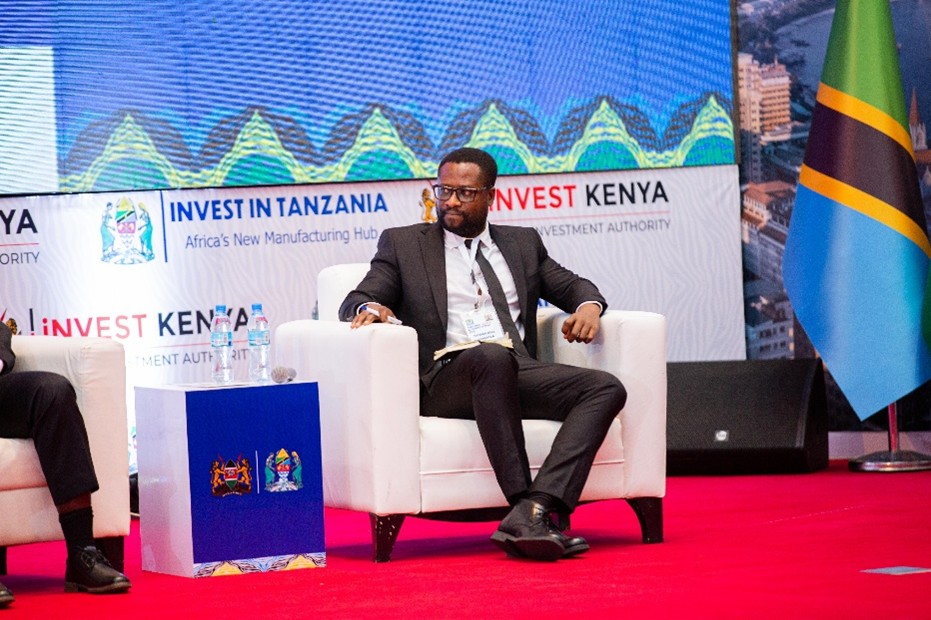
As part of its mandate to advance regional trade integration, TMA contributed to the policy dialogue. Mr Solomon Michael, TMA’s Acting Country Director for Tanzania, represented Chief Executive Officer Mr David Beer on the panel “Agriculture, Trade and Investment: From Farm to Market.” During the discussion, he highlighted the importance of building structured and integrated regional value chains that can support competitiveness, investment and sustainable market access across East Africa. He also emphasised the need for predictable investment and standards frameworks, strengthened cold chain and logistics systems for agricultural trade, and more efficient mechanisms for resolving NTBs to ease the movement of goods across borders.
“Policy and regulatory alignment has begun to translate into measurable improvements on the ground. Continued investment in digital trade systems and coordinated border management will further reduce clearance times, strengthen predictability and lower costs for traders across the region,” said Mr Michael.
Participants underpinned the value of integrated regional value chains, built on complementarity: Tanzania’s production capacity and Kenya’s strength in value addition together support a more competitive regional market.
The Forum closed with agreement to sustain reform momentum, including the removal of remaining NTBs, the establishment of a Joint Tanzania-Kenya Business Council, and continued engagement with the private sector.