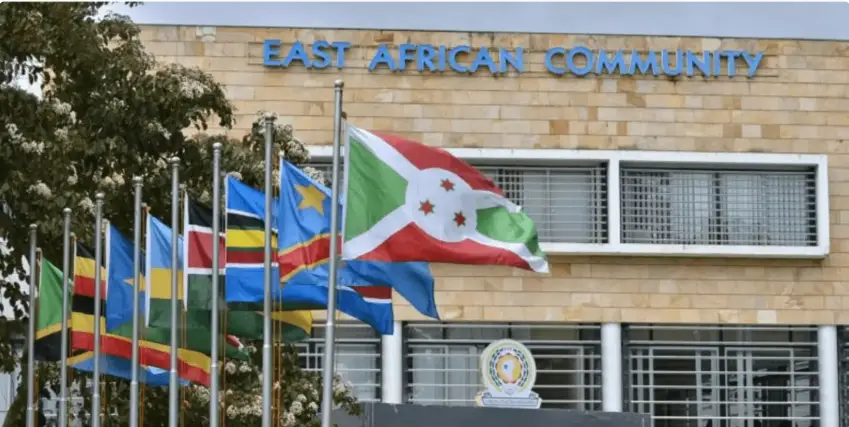
The EAC SPS Bill could become one of East Africa’s most commercially significant trade reforms of the past decade. The draft Bill, a joint common legal framework for sanitary and phytosanitary standards (SPS), is the result of years of technical work by the East African Community (EAC) and TradeMark Africa. If completed and enforced properly, it could help unlock billions in regional and export trade by reducing the quality and compliance barriers that keep agricultural goods out of markets – whether by delaying them at borders or marking them down for failing to meet safety requirements.
The Meeting of Legislative Draftspersons and SPS Experts, held in Dar es Salaam, Tanzania, from 9 to 13 February 2026, successfully finalised the Bill at technical level. As a result, the region is now a step closer to a more predictable and credible agri-food trade system.
Why a Decade of Quiet Policy Work Matters
In trade development, the most transformative changes are often the result of years of quiet, technical policy work – drafting laws, aligning priorities, and building consensus across countries. Few reforms illustrate this better than the push toward a harmonised Sanitary and Phytosanitary (SPS) framework in the East African Community.
At its core, the EAC SPS Bill establishes the risk governance infrastructure required for regional and global agri-food trade. By embedding science-based, harmonised rules into binding Community law, it transforms fragmented national systems into a coherent regional framework that enables predictable and more seamless trade.
The process of developing a regional SPS Bill has taken time. For the EAC Secretariat and TradeMark Africa, a decade. It has required technical consultations, negotiations between Partner States, and alignment with international rules under the World Trade Organization SPS Agreement. However, the economic gains such reforms unlock are substantial and measurable.
The Economic Case: What’s at Stake for Agricultural Trade
Agriculture is the backbone of East Africa’s economy. It employs most of the population and accounts for a large share of regional trade. Yet agricultural trade – at about 65% of intra-regional EAC trade – is uniquely vulnerable to food safety and plant health regulations. Reducing rejection rates, even modestly, can unlock hundreds of millions of dollars in additional trade each year. The stakes also extend beyond regional markets.
Consider the impact of aflatoxin contamination, a major SPS challenge across the region. The East African Community Secretariat estimates that the region exports roughly $2.52 billion in agricultural products annually, yet African exporters lose an estimated $670 million annually from rejected consignments linked to aflatoxin contamination alone. These losses translate into lower farmgate prices for producers, disrupted supply chains, and reduced investor confidence in agricultural value chains.
Even within domestic markets, quality failures bite hard. In some markets, millers have rejected around 19% of maize deliveries due to quality and safety concerns, with rates at times reaching 60%. This is why policy reforms like the EAC SPS Bill present possibilities for the biggest returns.
How SPS Frameworks Determine Trade Outcomes
In practical terms, SPS systems determine whether goods are accepted, delayed or rejected at borders. Weak systems translate directly into lost trade, while strong systems convert compliance into market access, competitiveness, and higher-value exports.
SPS frameworks function as the regulatory infrastructure of trade. They determine how countries test agricultural products, certify plant and animal health, manage pests and diseases, and recognise each other’s inspection systems. When these systems are fragmented, trade slows down. When they are harmonised, markets expand.
What the EAC SPS Bill Will Change for Exporters
The significance of the proposed regional SPS law lies in its attempt to turn this patchwork into a system. The Bill will anchor regional SPS measures in binding Community law, align them with WTO disciplines, recognise electronic certification and digital signatures, provide a legal basis for cross-border SPS data exchange, and clarify the roles of national authorities. In essence, it would make East African agricultural trade more predictable.
For exporters, this means:
- Fewer border disputes
- Clearer compliance requirements
- Faster certification processes
- Improved credibility in global markets
For governments, it strengthens the region’s ability to collectively meet global food safety standards set by institutions such as the Codex Alimentarius Commission and the International Plant Protection Convention.
The Cost of Inaction: A Cautionary Tale
When compliance gaps persist around pesticide residues, traceability, and food safety, entire markets can shrink rapidly. For example, Kenya’s vegetable export earnings dropped from a peak of Sh50.9 billion in 2023 to Sh23.4 billion in 2024, representing a 68% reversal over the two-year period due to strict European Union (EU) pesticide compliance rules. In this environment, regulatory preparedness becomes a competitive advantage.
A Decade of TMA’s Work Behind the Bill
Over the past decade, TMA has worked with governments to develop the regional SPS ecosystem. This work includes harmonised measures, Pest Risk Analyses (PRAs), veterinary Mutual Recognition Procedures, digital platforms, laboratory strengthening, inspector training, and coordination mechanisms toward finalisation of the Draft EAC SPS Bill. The Meeting of Legislative Draftspersons and SPS Experts held from 9 to 13 February 2026 in Dar es Salaam successfully finalised the Bill at technical level, moving the region closer to enhancing predictability for traders and strengthening confidence in regional agri-food trade systems.
What the Finalised EAC SPS Bill Already Does
The fully consolidated text — reconciled with the SPS Protocol and WTO SPS disciplines, and prepared for progression through the Community legislative process — already:
- Anchors adopted regional SPS measures and SOPs in binding Community law
- Embeds WTO SPS disciplines (science-based measures, proportionality, non-discrimination)
- Provides legal recognition for electronic certification and digital signatures
- Establishes a legal framework for cross-border SPS data exchange
- Clarifies roles of national competent authorities
- Strengthens emergency response and safeguard mechanisms
- Introduces structured mechanisms for technical consultation and dispute prevention
What Happens Next: Institutional Arrangements
The next step focuses on establishing institutional arrangements. The EAC Secretariat is expected to reconvene discussions on governance arrangements, particularly the establishment of a functional and authoritative EAC Regional SPS Committee. That body will serve as the central mechanism for coordination of implementation: overseeing harmonisation, resolving SPS trade concerns, guiding risk-based decision-making, and ensuring consistent application of measures across Partner States. Its effectiveness will determine whether the gains of the Bill are realised in practice.
Policy Reform as Patient Capital
Policy processes like the EAC SPS Bill require sustained technical and financial support, including legal drafting, scientific expertise, laboratory capacity, and coordination across ministries and countries. However, the returns are far greater than the investment — which is why all partners must stay the course. Every shipment that clears a border without delay, every consignment that meets international safety standards, and every exporter that gains access to new markets is evidence of the value of these reforms.
In other words, policy reform is trade facilitation. And by virtue of the fact that it takes time, it is patient capital.