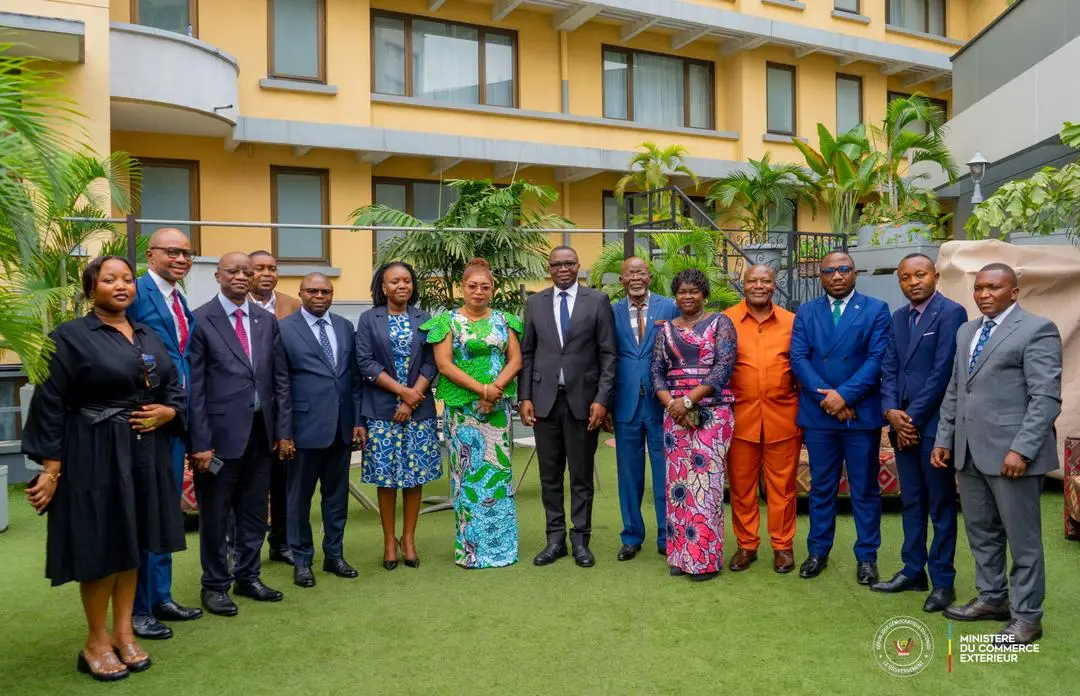
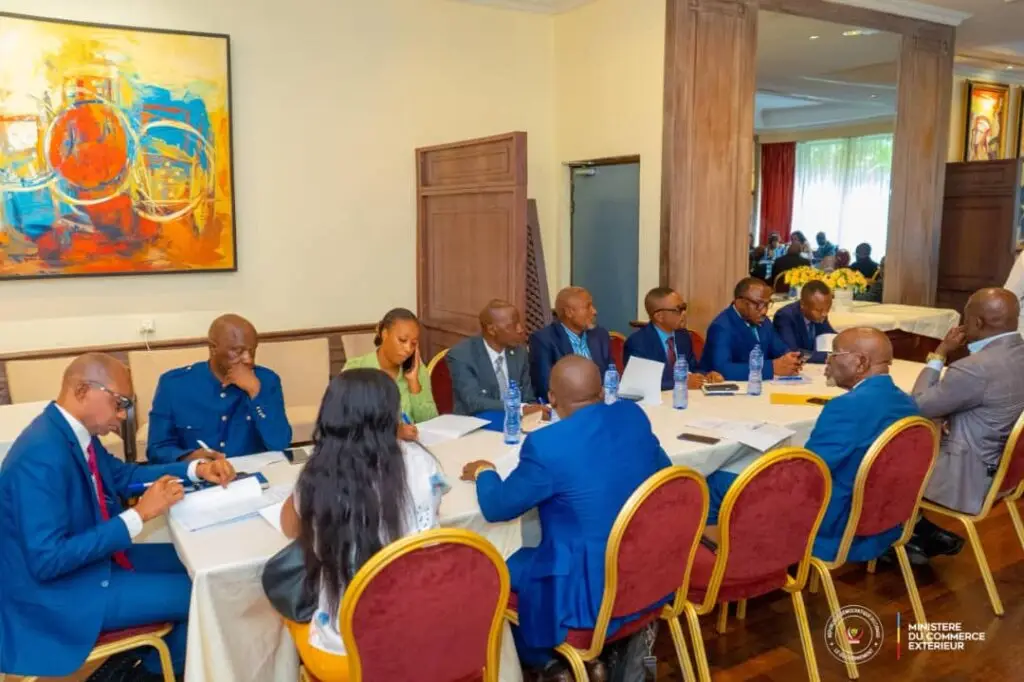
In Kinshasa, Democratic Republic of Congo, the minister of foreign trade, H.E. Julien Paluku Kahongya, opened a workshop on the Simplified Trade Regime, known locally as RECOS, on 11 December 2025. The two-day forum brought together provincial trade ministers, border agencies and small-scale traders to assess whether border procedures serve the people who rely on them.
The workshop followed the DRC’s ratification of the World Trade Organization’s Trade Facilitation Agreement in July last year, signalling commitment to regional and global trade integration. The Agreement is associated with average trade-cost reductions of around 14%, with larger gains in lower-income economies where administrative frictions are most pronounced. The Kinshasa discussions focused on converting that commitment into daily outcomes at border posts across North Kivu, South Kivu, Ituri, Haut-Katanga and Lualaba.
For communities along these borders, trade is part of daily life. It moves food from farms to markets, supports household incomes and provides resilience when prices rise or jobs disappear. For many small-scale traders, women in particular, cross-border trade is their main source of income. When border systems work poorly, the consequences extend beyond individual traders through rising prices, weakened supply chains and eroding confidence in public institutions.
Border systems rarely reflect how this trade takes place. Most procedures are designed for large firms, formal documentation and bulk consignments. Small-scale traders operate differently, trading frequently in modest quantities and depending on speed and clarity. Instead, they face repeated inspections, unclear requirements and charges that vary from one crossing to another. These barriers raise costs, weaken trust and push trade into informality rather than the regulated economy. The Simplified Trade Regime was created to address this mismatch.
During the workshop, participants examined how RECOS operates on the ground. Training sessions covered simplified procedures for eligible small-scale traders, the Trade Facilitation Agreement, the digitalisation of import, export and transit processes, and trade diplomacy. Officials from customs, standards and migration services worked directly with trader associations to clarify roles, responsibilities and coordination at the border.
Evidence from East and Central Africa shows that border reforms deliver the greatest gains when border agencies work together. A review of trade facilitation measures by the World Bank’s Independent Evaluation Group in 2018 found that coordinated procedures, shared inspections and clearer documentation requirements are linked to shorter clearance times and lower transaction costs, especially in countries where multiple authorities operate at the border.
H.E. Kahongya placed the regime within the country’s trade policy, which rests on four pillars: economic diversification, market diversification, value-chain development and infrastructure development. He highlighted partnerships with the World Trade Organization (WTO), the United Nations Conference on Trade and Development (UNCTAD) and the International Trade Centre (ITC) following ratification of the Trade Facilitation Agreement.
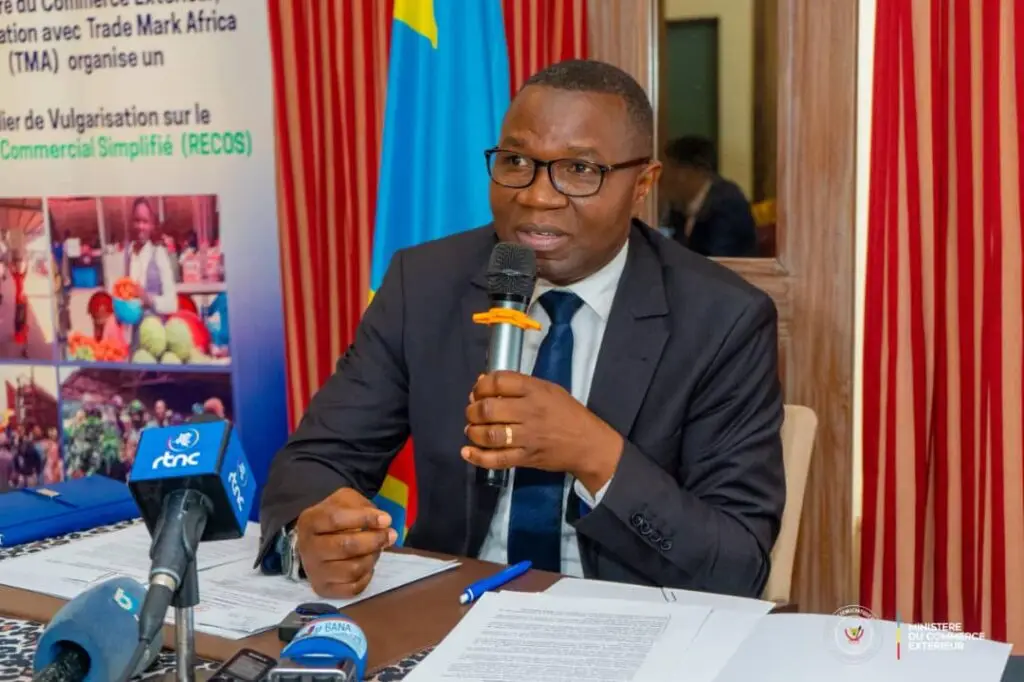
Speaking at the forum on behalf of TradeMark Africa’s country director, programme manager Gladys Kalombola noted that the workshop was about closing the gap between rules and reality. “The Simplified Trade Regime only delivers results when traders and border officials understand it in the same way. This dialogue helps turn policy commitments into fair, predictable processes that reduce costs for small-scale traders and strengthen trust at the border.”
For traders, the regime offers predictability. It reduces paperwork, sets clear value thresholds and defines which goods qualify for simplified treatment. When applied consistently, traders spend less time waiting, face lower costs and understand what is required of them, creating borders that work better because they work reliably.

That reliability shapes daily commerce. Small-scale cross-border trade accounts for much of the food and household goods people buy. When procedures remain unclear or change without notice, the effects spread quickly through rising prices, disrupted supply chains and eroding confidence in public institutions.
The workshop demonstrated why dialogue between traders and officials matters. Participants identified where rules are misunderstood and where systems break down in practice. Compliance improves when procedures are clear, consistent and perceived as fair. The initiative aligns with TradeMark Africa’s agenda to reduce barriers for small-scale traders, improve transparency and strengthen coordination among border agencies. The workshop received technical and financial support from TradeMark Africa, funded by the European Union and the UK International Development.
Trade reform often focuses on roads, ports and technology, and whilst these investments remain necessary, the Simplified Trade Regime poses a different test: can a trader cross the border knowing the rules, trusting that officials will apply them consistently and feeling treated with respect?
Borders do not need less government but clearer rules, fair enforcement and institutions that answer to the people they serve. Systems designed for large firms will exclude small traders unless deliberately adapted. When most cross-border traders are women working in the informal economy, weak procedures do more than waste time, they restrict livelihoods. When borders work for people, trade supports incomes, strengthens markets and builds stability. When borders fail, they extract value instead of enabling exchange, undermining the connections they exist to create.