
Summary
- Global Net Zero policies and EU measures (EUDR, CBAM) are shifting compliance emphasis, market dynamics, and reshaping trade across value chains.
- Calls to shift trade transportation modalities highlight the challenges of ‘greening supply chains’ especially where evidence is limited. For example, maritime freight can offer cost/emission benefits over air freight in select cases.
- However, air freight remains vital for essential and time-sensitive exports such as high-value agriculture and both modes are complementary and support broader export diversification efforts.
- Compliance costs and data gaps pose market access risks for smaller farmers and even whole sectors and there is an urgent need for more targeted support.
- It is important to establish improved evidence and practice insights as well as pushing to implement digital traceability systems, cold chain investment, policy advocacy, and farmer capacity building.
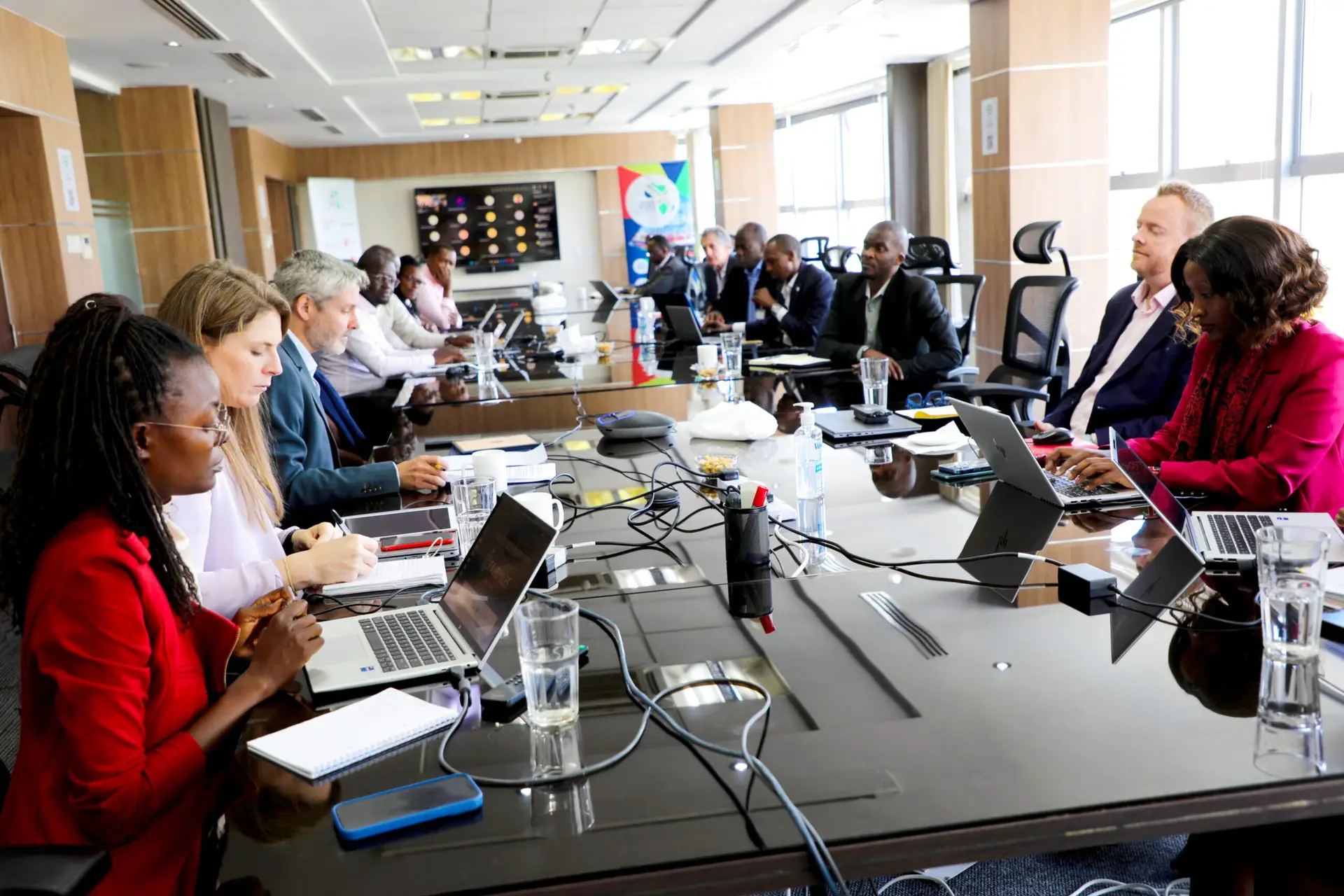
As global net-zero policies accelerate, Africa’s agrifood exporters face a critical crossroads: how can climate action be ambitious yet equitable? A green trade roundtable convened by ODI Global, TradeMark Africa and the Fairmiles Consortium in Nairobi on 8 December 2025, brought together airlines, exporters, logistics experts, researchers and development partners to tackle this urgent question. Their consensus? The green transition must be both environmentally effective and socially just – or risk undermining the livelihoods of millions who depend on Africa’s export economy. International trade is a proven route of economic development yet there are risks of reductions in market entry because of the design and application of some trade related climate measures.

European climate measures such as the EU Deforestation Regulation (EUDR) and the Carbon Border Adjustment Mechanism (CBAM) are rapidly transforming global agrifood markets, given the inclusion of fertiliser but also transportation by maritime and aviation. The roundtable spotlighted how these policies are already impacting exporters, producers and supply chains, given retailers responses, forcing a rethink of how high-value fresh produce reaches consumers.
James MacGregor from Fairmiles warned that decisions made in European horticulture and fresh produce buyer boardrooms ripple through entire value chains in Africa. “Buyers must move beyond carbon metrics and costs alone,” he said. “They need to consider what those decisions mean for the livelihoods of smallholder farmers, workers and communities whose incomes depend on these exports.”
Jodie Keane, Principal Research Fellow at ODI Global emphasised the risk of a poorly designed green transition: without solid evidence, fair pricing arrangements and technology tailored to producers’ realities, the green transition could become “economically destructive rather than environmentally transformative”. She called for clear, accessible data and communication to demonstrate how better-designed supply chains can deliver positive outcomes for all.
The modal shift debate: air freight vs sea freight
One of the roundtable’s most pressing concerns was the growing trend among buyers de-risking by reducing air-freighted imports in favour of sea freight, despite limited evidence that is always better for the climate or consumers. Participants cautioned that when the associated costs of certification, carbon credits or modal shifts are passed straight to farmers, the transition threatens to become unsustainable.
Kenya’s recent pilots under the EU-funded BEEEP programme offer a glimpse of what’s possible. By shifting products from road and air to a combination of rail Standard Gauge Railway (SGR) and refrigerated sea shipping, these trials have maintained freshness and reduced emissions. However, Clement Tulezi of the Kenya Flower Council highlighted the trade-offs: moving to sea freight often requires different crop varieties, new post-harvest treatments, stronger cold-chain systems and investment in inland consolidation hubs are critical to success. Without these, smallholder farmers, who form much of the export base, risk exclusion from lucrative EU markets.

Aviation’s role in a just transition
Airlines are offering climate-mitigation alternatives such as carbon-compensation schemes and Sustainable Aviation Fuel (SAF) options, as shared by Lufthansa Cargo’s Zlatic Zlatko. While SAF supply remains costly and scarce today, industry leaders predict prices will fall as demand grows. Against a backdrop where millions of livelihoods are tied to fresh-produce exports, the notion of a just transition was a recurring theme throughout the debate. The consensus was that neither air freight nor sea freight alone can safeguard Africa’s export economy in a low-carbon future.
What is needed, they concluded, is a balanced, multi-modal strategy supported by robust data and coherent policy that reflects the complex realities of African supply chains.
James MacGregor stressed that a fair transition depends on retailers and consumers in export destinations sharing the burden of climate costs. “Climate-related expenses cannot simply be transferred to African producers,” he said. Jodie Keane added that the “green squeeze must be avoided. We need to work to find solutions that are both good for the climate and make commercial sense”.
David Beer, CEO of TradeMark Africa, echoed this sentiment underscoring that decarbonisation and development must go hand in hand. “The transition must be green – but it must also be fair,” he concluded.