
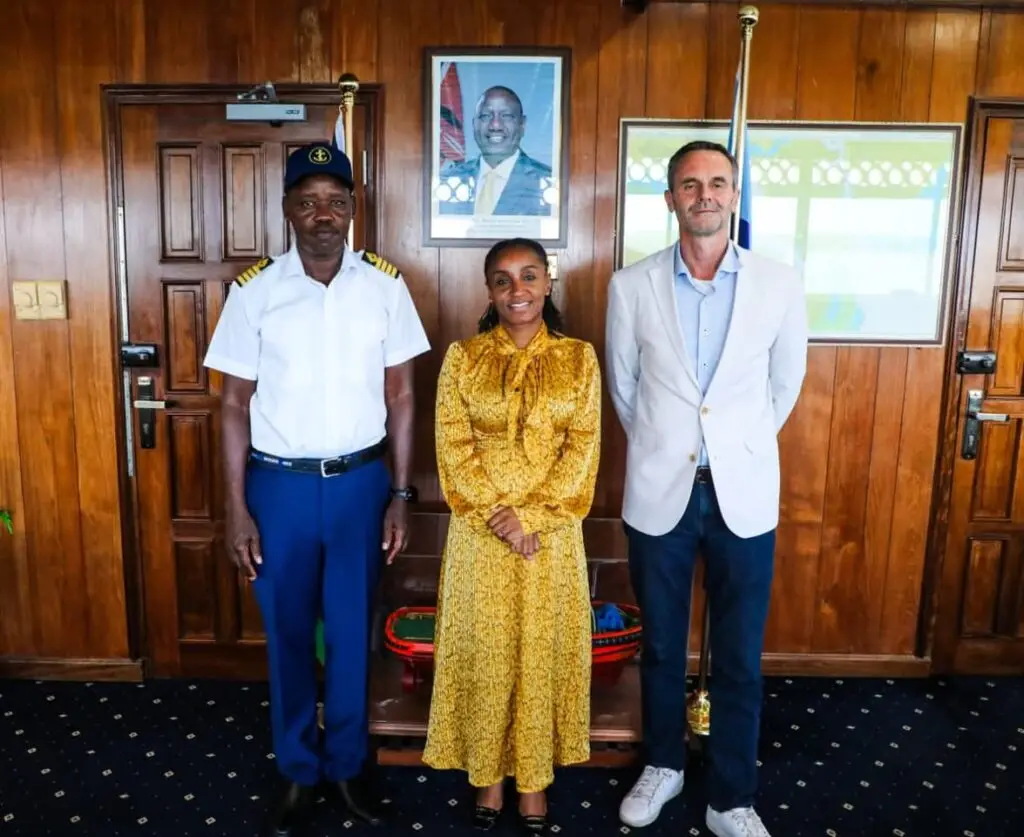
KPA boss William Ruto (left) with Netherlands Deputy Ambassador to Kenya, Mr. Jaco Beerends (right) alongside Trademark Africa Country Director Ms. Lilian Mwai. (Photo/Courtesy)
By Andrew Mwangura
Email, thecoastnewspaper@gmail.com
The recent commendation by the Netherlands Deputy Ambassador to Kenya, Mr. Jaco Beerends, on the progress at the Port of Mombasa is more than diplomatic politeness.
It is a significant, timely affirmation that sustained investment, strategic partnerships, and clear vision can successfully reposition a historic port for modern global trade.
At a moment of strained supply chains and fierce regional competition, this external validation underscores the critical importance of staying the course on transformative reforms.
Mr. Beerends’s remarks, made during a working visit to the port with Kenya Ports Authority (KPA) Managing Director Captain William Ruto, focused on strengthening collaboration to improve operations and facilitate regional trade.
The presence of Trademark Africa Country Director Ms. Lilian Mwai alongside the envoy highlighted the practical, outcome-oriented partnerships underpinning the port’s recent gains. This was a conversation anchored in shared interests and measurable progress.
As the backbone of Kenya’s maritime economy and a vital gateway for Eastern and Central Africa, the Port of Mombasa’s performance directly influences the entire Northern Corridor.
Its efficiency affects business costs, export competitiveness, and the reliability of imports for landlocked nations.
The Netherlands’ sustained support for Kenya’s trade facilitation agenda reflects a clear understanding: ports do not operate in isolation. They are nexuses within an integrated system of hinterland transport, border processes, inland depots, and digital platforms.
Captain Ruto’s acknowledgment of the Dutch government and Trademark Africa highlights the value of long-term, trust-based partnerships. These collaborations have driven transformative projects not only in Mombasa, but also at key inland nodes like the Naivasha Inland Container Depot, the Busia One-Stop Border Post, and Lake Victoria navigation safety initiatives. This holistic approach is essential, recognizing that trade facilitation requires seamless movement from ship to final destination.
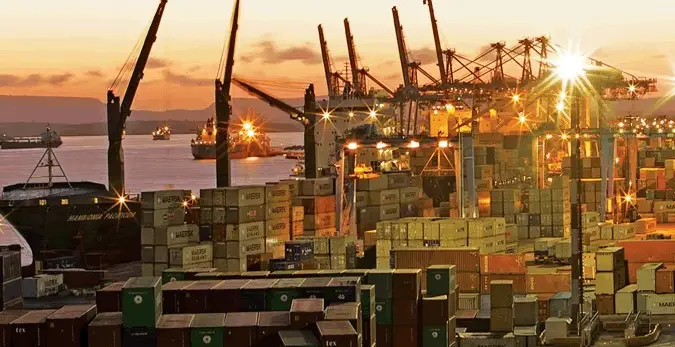
A cornerstone of this progress is the installation of the Smart Gates System at the Port of Mombasa. This digital platform aims to streamline cargo clearance, reduce dwell times, and boost overall throughput.
In an era where technological edge defines efficiency, such smart systems are imperative. Reducing human bottlenecks, enhancing data visibility, and enabling faster decisions are non-negotiable if Mombasa is to compete effectively along the Indian Ocean rim. This step aligns the port with global best practices.
Beyond technology, the focus on e-mobility and the blue economy signals a commendable commitment to sustainability. Ports are economic engines but also major energy consumers with environmental impacts.
By supporting innovations in cleaner mobility and sustainable maritime resource use, partners like the Netherlands and Trademark Africa are helping Kenya balance growth with environmental stewardship—a crucial alignment as stricter international shipping standards increasingly influence port selection.
Ms. Mwai’s reaffirmation of Trademark Africa’s commitment reminds us that development is a continuous process. Infrastructure investments deliver the highest returns when coupled with policy reform, capacity building, and stakeholder engagement.
Mombasa’s progress demonstrates what is possible when these elements converge, but also warns that gains can be eroded if momentum falters or reforms are seen as completed projects rather than an ongoing journey.
Therefore, the Dutch envoy’s praise should be viewed as both recognition and encouragement. It acknowledges the strides made by KPA under its current leadership and urges a deepening of reforms to enhance efficiency, transparency, and resilience.
For Kenya, preserving Mombasa’s regional preeminence will demand continued investment, openness to innovation, and robust partnerships with development allies and the private sector.

From my perspective as an independent maritime consultant, the transformation of the Port of Mombasa is not merely a national priority but a regional imperative.
The Dutch delegation’s visit underscores the immense value of international cooperation in this endeavour. The challenge ahead is to convert this goodwill and support into sustained, peak performance—ensuring the Port of Mombasa remains a reliable, efficient, and competitive gateway for generations to come.
Mr. Mwangura is an independent maritime consultant and former Secretary General of the Seafarers Union of Kenya (SUK).