

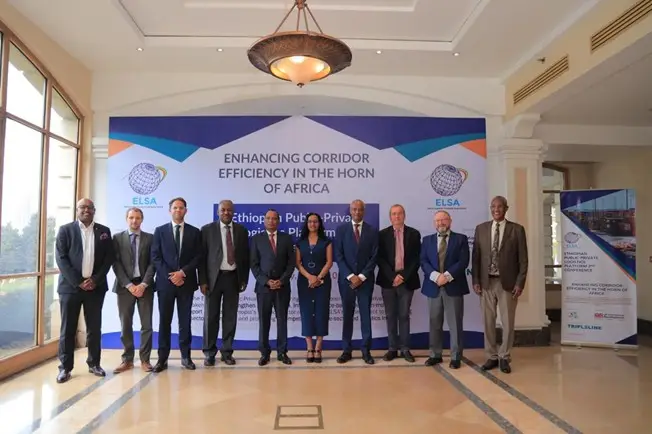
Trade corridors move goods from production centres to markets. When logistics systems function well, clearance times fall and costs decline. When they do not, delays and regulatory friction raise the cost of doing business. These issues formed the focus of discussions at the Enhancing Corridor Efficiency in the Horn of Africa Conference held in Addis Ababa on 10 March 2026.
The conference was convened under the UK-funded Enhancing Corridor Efficiency in the Horn of Africa project, implemented by TradeMark Africa (TMA). Ethiopia’s Minister of Transport and Logistics, Dr Alemu Sime, joined policymakers, logistics operators and industry representatives to examine Ethiopia’s logistics sector and the performance of regional trade corridors, with particular attention on evolving trade dynamics and logistics reform.
Ethiopia’s logistics strategy has traditionally operated under a centralised structure designed to manage freight operations and regulate foreign exchange flows. Two policies have shaped this system: the Free on Board (FOB) requirement for imports and the Multimodal Transport System (MMTS), which assigns responsibility for cargo movement from ports to inland destinations to a single operator. The state-owned Ethiopian Shipping and Logistics (ESL) has historically held that role, transporting multimodal imports, managing freight payments and consolidating logistics functions.
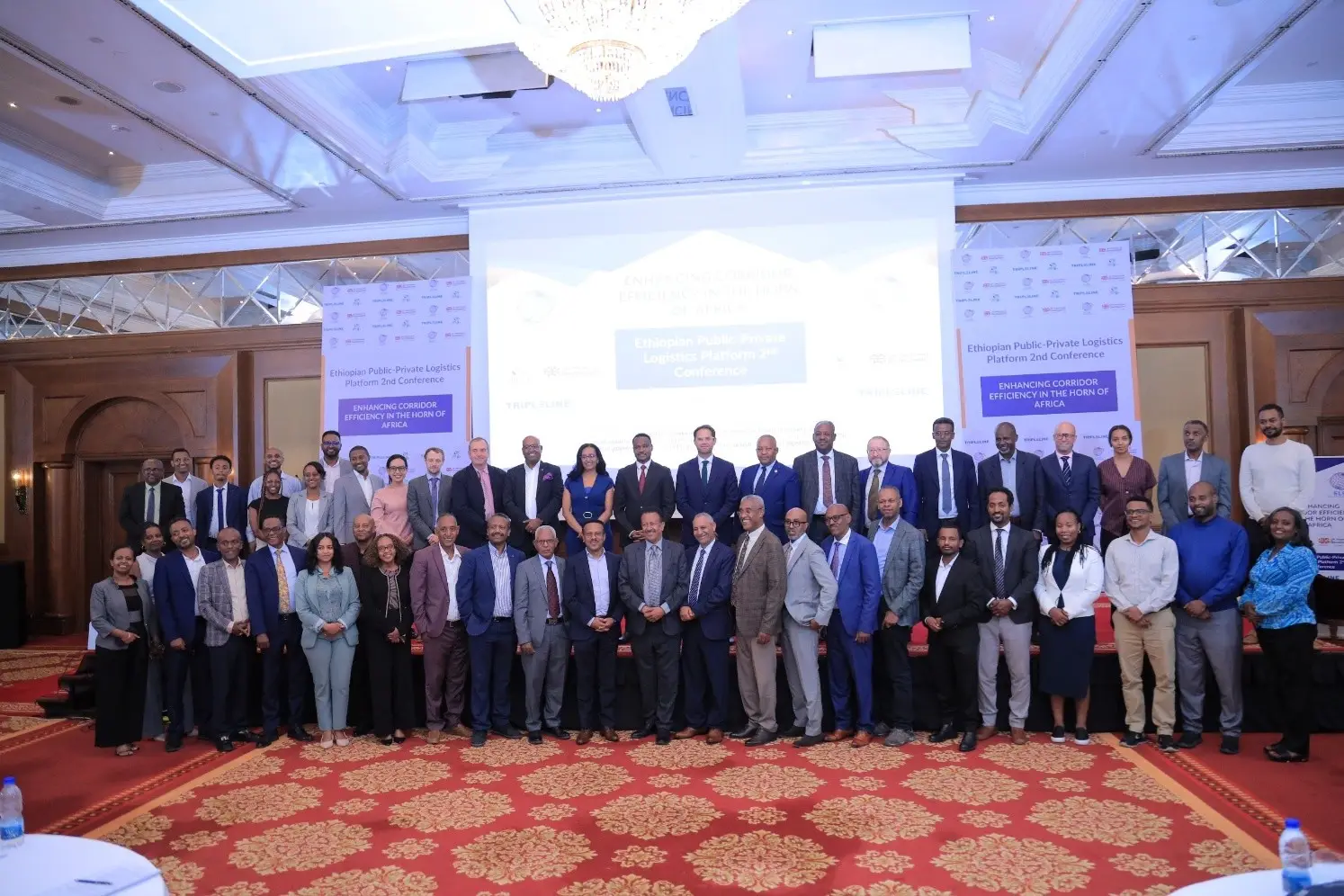
Despite this, Ethiopia’s trade and logistics environments have evolved. Regional logistics networks have expanded, and cargo volumes have increased. According to the World Bank Logistics Performance Index (2023), Ethiopia ranks 126th out of 139 countries, reflecting constraints in customs procedures, infrastructure, and logistics services. In response, Ethiopia adopted the 10-year National Logistics Strategy in 2018, which introduced reforms to improve logistics efficiency, including opening the logistics sector to private participation. These reforms include licensing new private multimodal transport operators and allowing foreign participation in freight forwarding through joint ventures.
Discussions at the conference indicated that this transition is ongoing. Private operators reported barriers that limit their participation in multimodal cargo movements, primarily related to operating in Djibouti. Stakeholders cited restricted access to cargo flows, insurance and liability requirements, and operational challenges along the Djibouti corridor. Additional constraints are particularly visible at Modjo Dry Port, Ethiopia’s primary inland logistics hub, which handles around two-thirds of the country’s containerised cargo and currently excludes private-sector operators. Opening up the operational arrangements to make Modjo a common user facility, therefore, influences the efficiency of Ethiopia’s national logistics system.
Participants also examined proposed regulatory reforms. The Unified Logistics Service Providers Regulation seeks to harmonise oversight across freight forwarders, customs clearing agents and multimodal operators. A unified regulatory framework will clarify licensing requirements and strengthen professional standards across the sector.
Proposals to introduce Common-User Facilities (CUF) at all dry ports were also discussed. Under this approach, cargo handling infrastructure would remain accessible to multiple operators under transparent conditions, enabling several logistics providers to operate within shared facilities.
Organisations such as EFFSAA, the Customs Clearing Agents Association (CCAA), and ELSA provide platforms through which logistics operators engage with the government on operational challenges and policy reforms. These platforms ensure public institutions and private operators review corridor performance and identify practical solutions to operational bottlenecks.

Regional connectivity also formed a major part of the discussions. Ethiopia conducts more than 90% of its international trade through the Djibouti corridor, which remains the country’s principal maritime gateway. Policymakers and logistics operators are therefore examining alternative corridors to diversify trade routes.
Two initiatives illustrate this effort. The Djibouti–Ethiopia–South Sudan-Uganda (DESSU) corridor seeks to strengthen regional connectivity across the Horn of Africa. The Berbera corridor, linking Ethiopia to the Port of Berbera in Somaliland, provides another maritime outlet.
Infrastructure alone will not determine corridor performance. Traders and logistics operators require regulatory clarity, predictable procedures and coordination among corridor institutions.